
Muscle Complaints: The Adductors
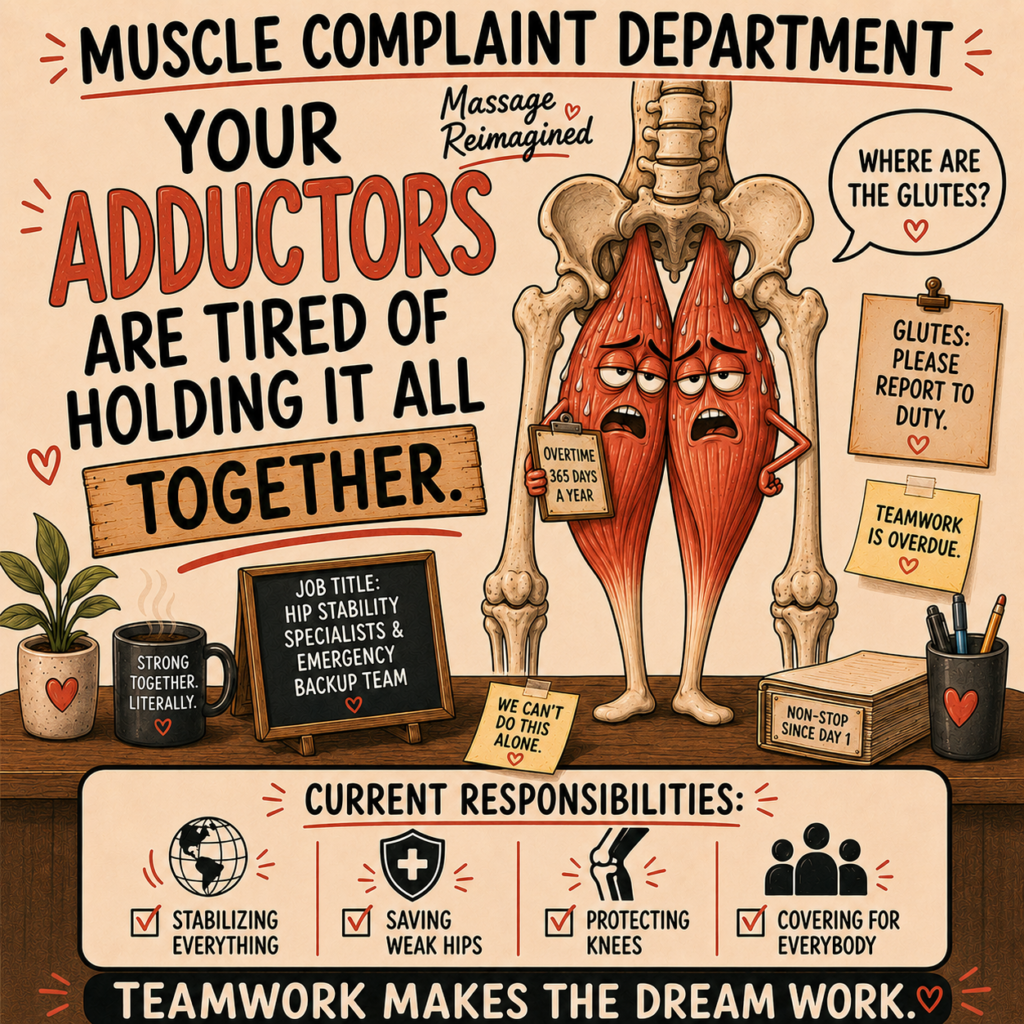
Your inner thigh muscles help steady the hips and knees with every step. Learn why the adductors get overworked and how adductor massage may help.
Muscle Complaints: The Upper Traps

Your upper traps were built to move your shoulders, not hold your stress. Learn why they tighten and how upper trap massage may help them let go.
Muscle Complaints: The Hamstrings

Hamstrings that never loosen may be overworked, not short. Learn why the glutes, pelvis and stress matter, and how hamstring massage may help them let go.
Muscle Complaints: The Diaphragm
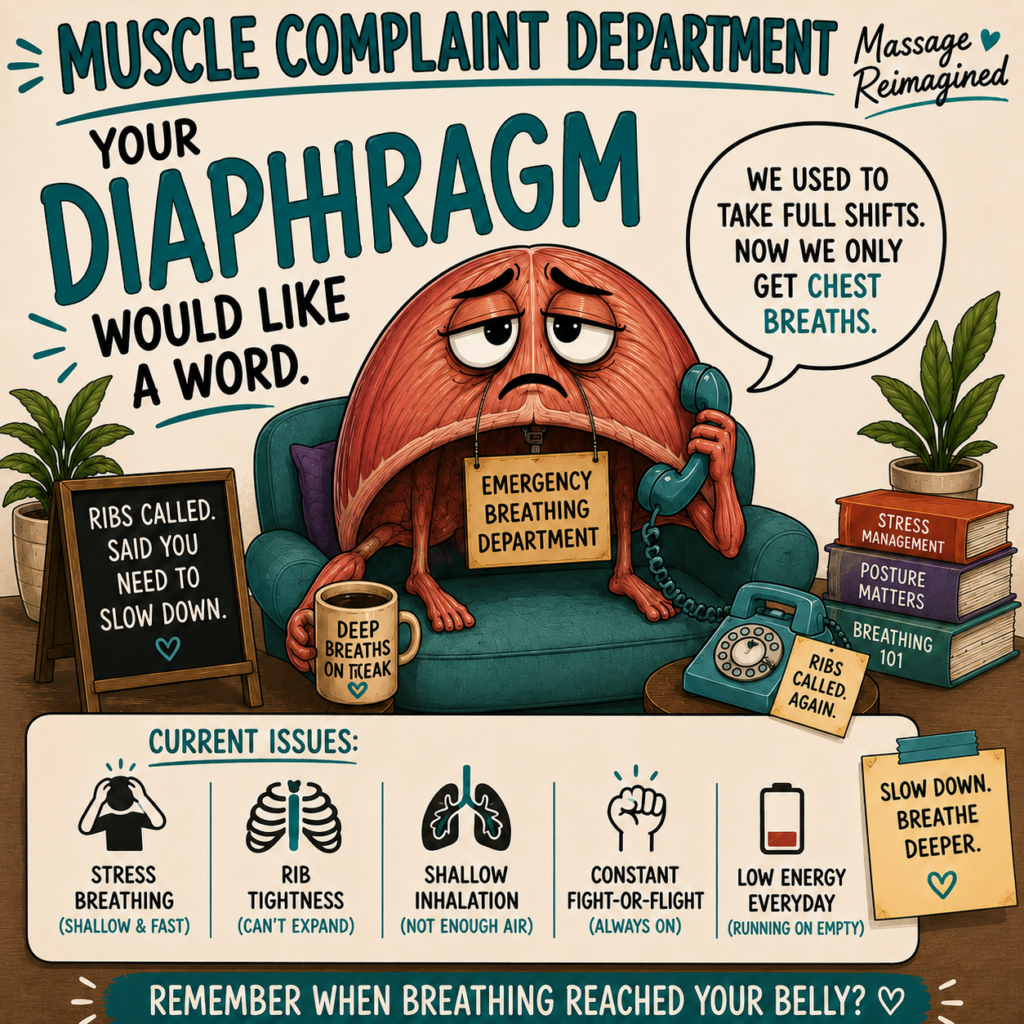
Stress can turn every breath into a short chest breath. Learn how the diaphragm works, why it gets guarded, and how massage may help breathing feel easier.
How to Choose a Massage Therapist in Seattle (What Actually Matters)

Choosing a massage therapist is a personal, expensive decision. Seattle massage therapist Joe Lavin explains how to read reviews, what to ask, and what to look for.
Muscle Complaints: The Missing Muscle Report
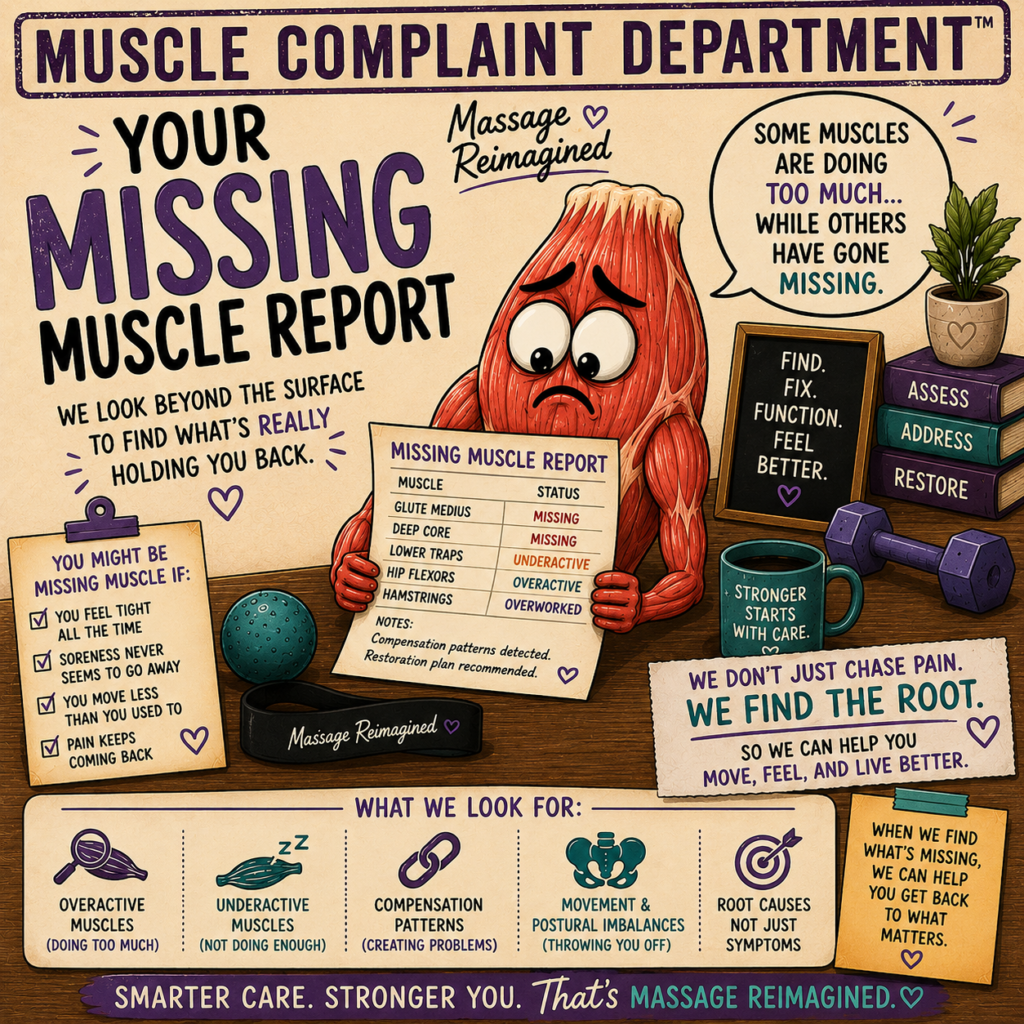
Why Whole-Body Massage Looks Beyond the Painful Spot Clients often ask, ‘What muscle is causing my pain?’ It is a reasonable question, but the answer is frequently more complicated than naming one structure. The muscle that hurts may be working too hard because another region is not contributing. It may be protecting an irritated joint, […]
Muscle Complaints: The Nervous System
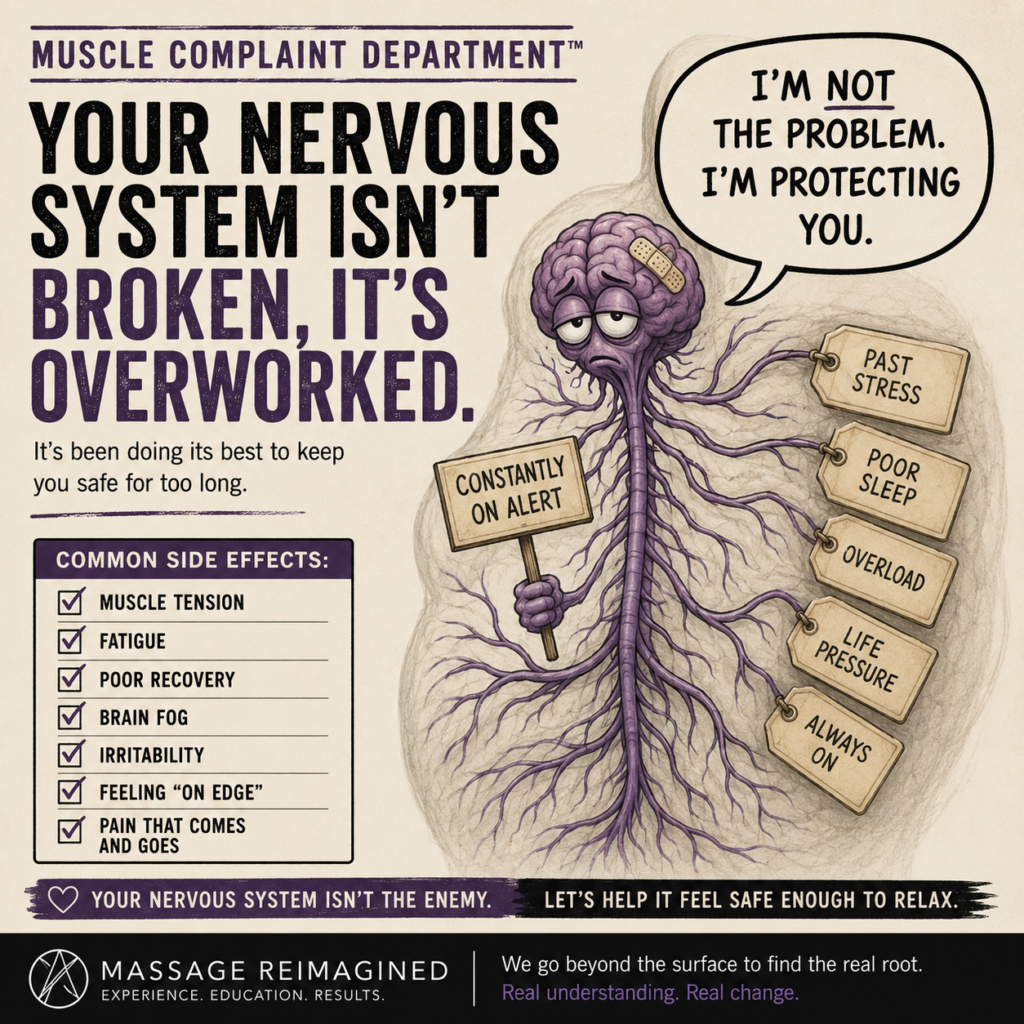
Why the Body Protects Before It Relaxes The nervous system may be the most important member of the Muscle Complaint Department. Every movement, sensation, breath, and experience is processed through it. Muscles do not decide independently to tighten or relax; their tone is influenced by the brain, spinal cord, sensory information, past experiences, current demands, […]
Muscle Complaints: The SI Joint
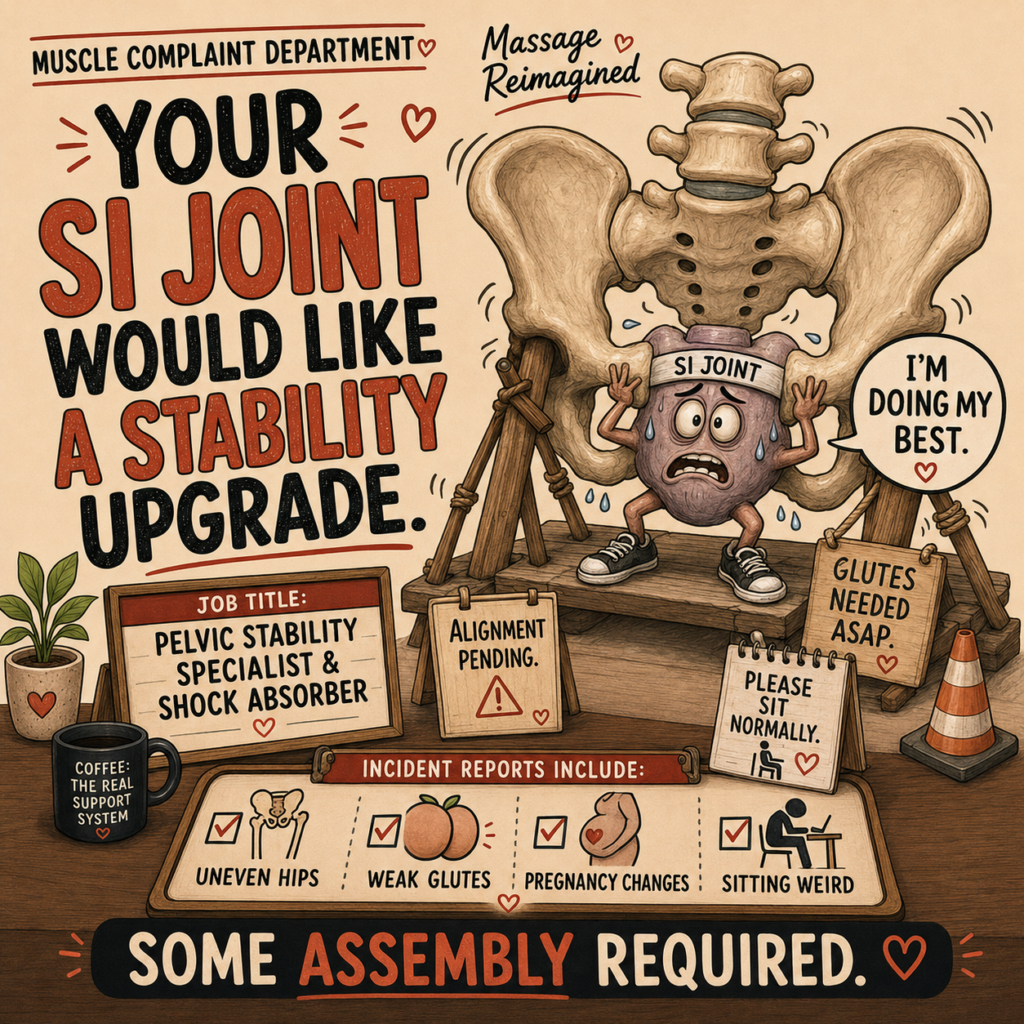
Stability, Load Transfer, and Pelvic Tension The sacroiliac, or SI, joint sits where the sacrum meets the pelvis. It moves only a small amount, but it plays an important role in transferring force between the spine and legs. Because discomfort in this area can be sharp, one-sided, and difficult to describe, the SI joint often […]
Muscle Complaints: The Deep Core Muscles
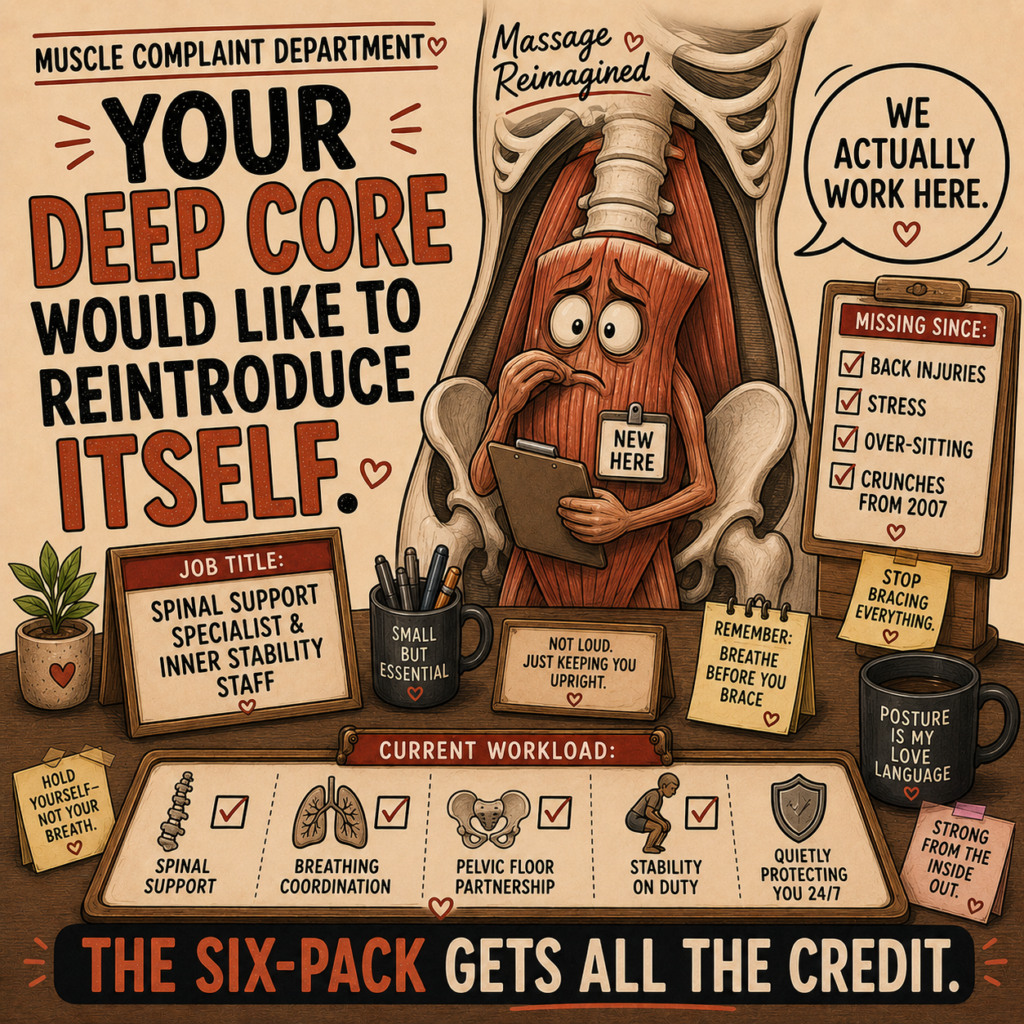
Stability Without Constant Bracing The deep core muscles are stabilizers, not superheroes. They include structures such as the diaphragm, pelvic floor, deep abdominal muscles, and small spinal stabilizers that coordinate pressure and support through the trunk. Unlike the visible six-pack muscles, their most important work is subtle. They help you breathe, transfer force, adjust to […]
Muscle Complaints: The Forearms

Relief for Typing, Scrolling, Gripping, and Repetitive Work Your forearms perform thousands of small tasks every day. Typing, texting, scrolling, driving, lifting, carrying, gripping, cooking, gaming, and using tools all require repeated coordination between muscles that move the wrist, fingers, thumb, and elbow. Because the effort is often light, people underestimate the total workload. A […]