Your hamstrings aren’t tight. They’re terrified.
If you have stretched your hamstrings for years and they still feel tight, you are not alone. Many people treat tight hamstrings as a length problem. Often they are a workload problem. When other muscles are not doing their share, the hamstrings take over jobs they were never meant to do full time, and they hold on. Hamstring massage in Seattle is one of the most common requests we hear, and the most useful sessions look beyond the back of the thigh.
What the hamstrings actually do
The three hamstring muscles run from the sitting bones at the bottom of the pelvis to just below the knee. They bend the knee, help extend the hip when you walk, run or climb stairs, and help control the pelvis. Because they cross both the hip and the knee, they are involved in almost every step you take.
Why hamstrings end up doing everyone else’s job
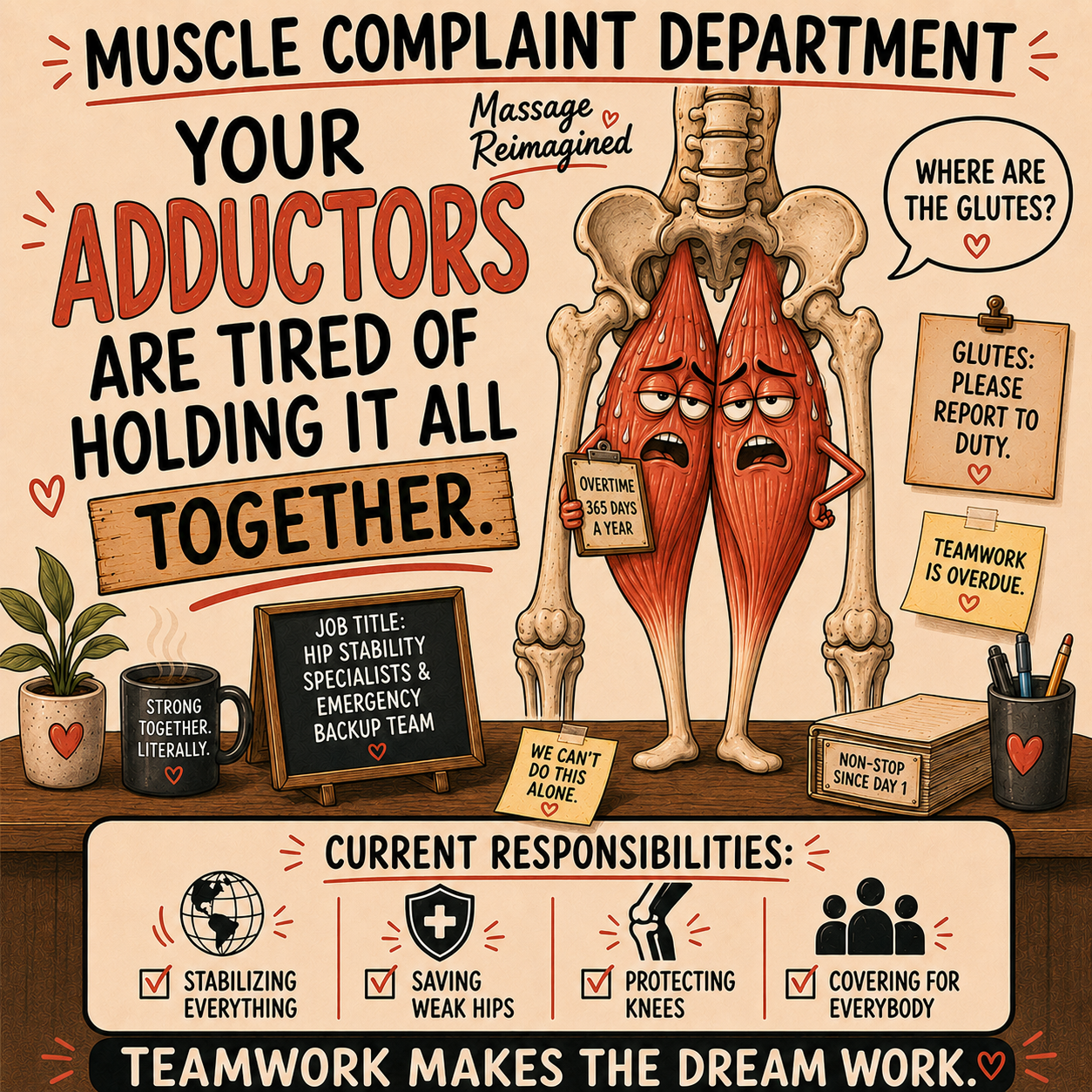
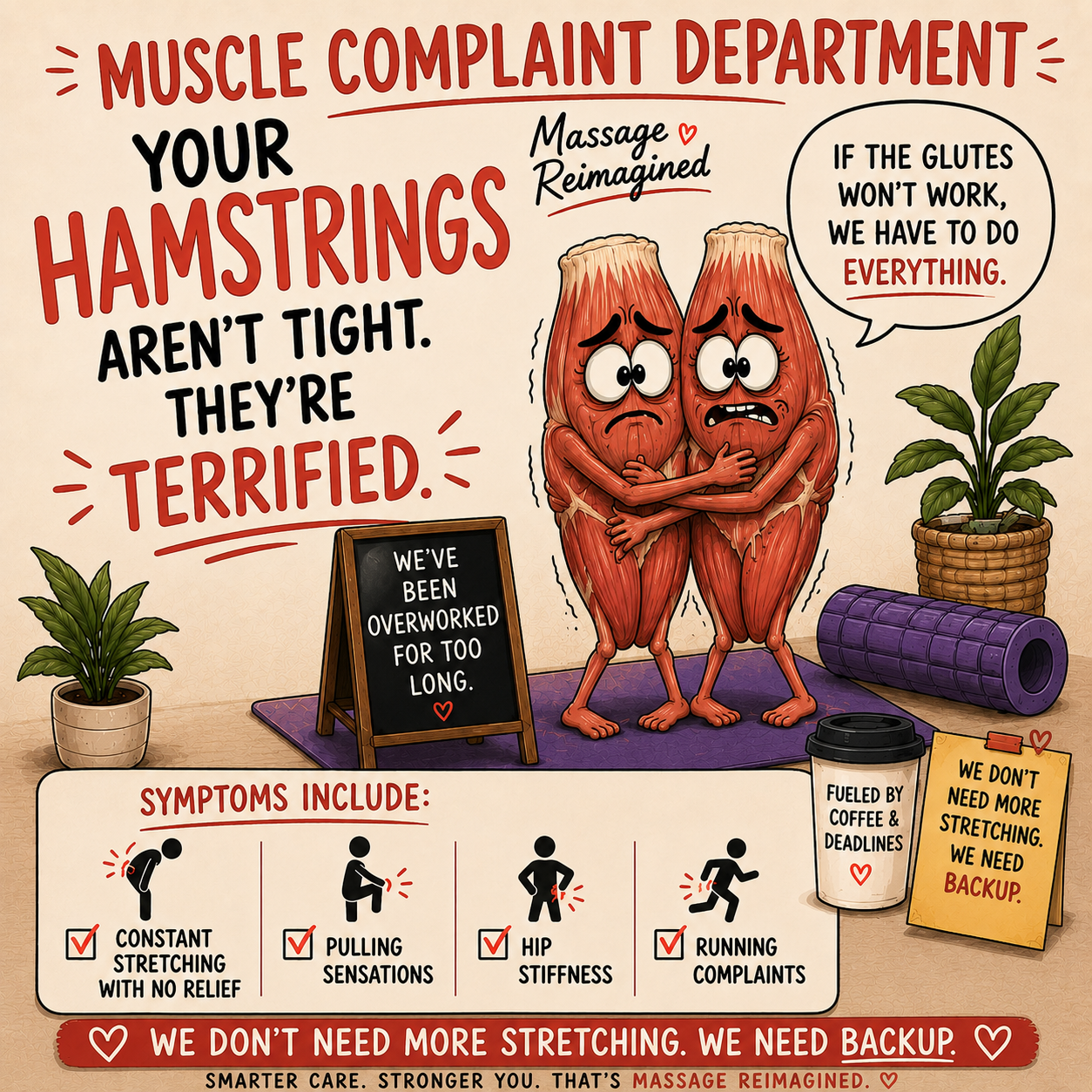
The hamstrings and the glutes share the work of extending the hip. When the glutes are underused, which is common after long days of sitting, the hamstrings often pick up the slack. They may also brace to help stabilize the pelvis or low back when the deep core is not doing its part. A muscle that is constantly working can feel tight even when it has plenty of length.
Stress plays a role too. A body that feels unsafe tends to guard, and the back of the legs is a common place to do it. That is one reason why stretching harder does not always help. Pulling on a muscle that is already on guard can make it hold on even more.
What overworked hamstrings can feel like
People describe a constant pulling at the back of the thighs, stiffness when bending forward, tightness behind the knees, a sense that the legs never fully relax, or discomfort that seems to connect to the low back, the SI joint, or the calves. Runners often notice it during or after longer runs.
How massage may help
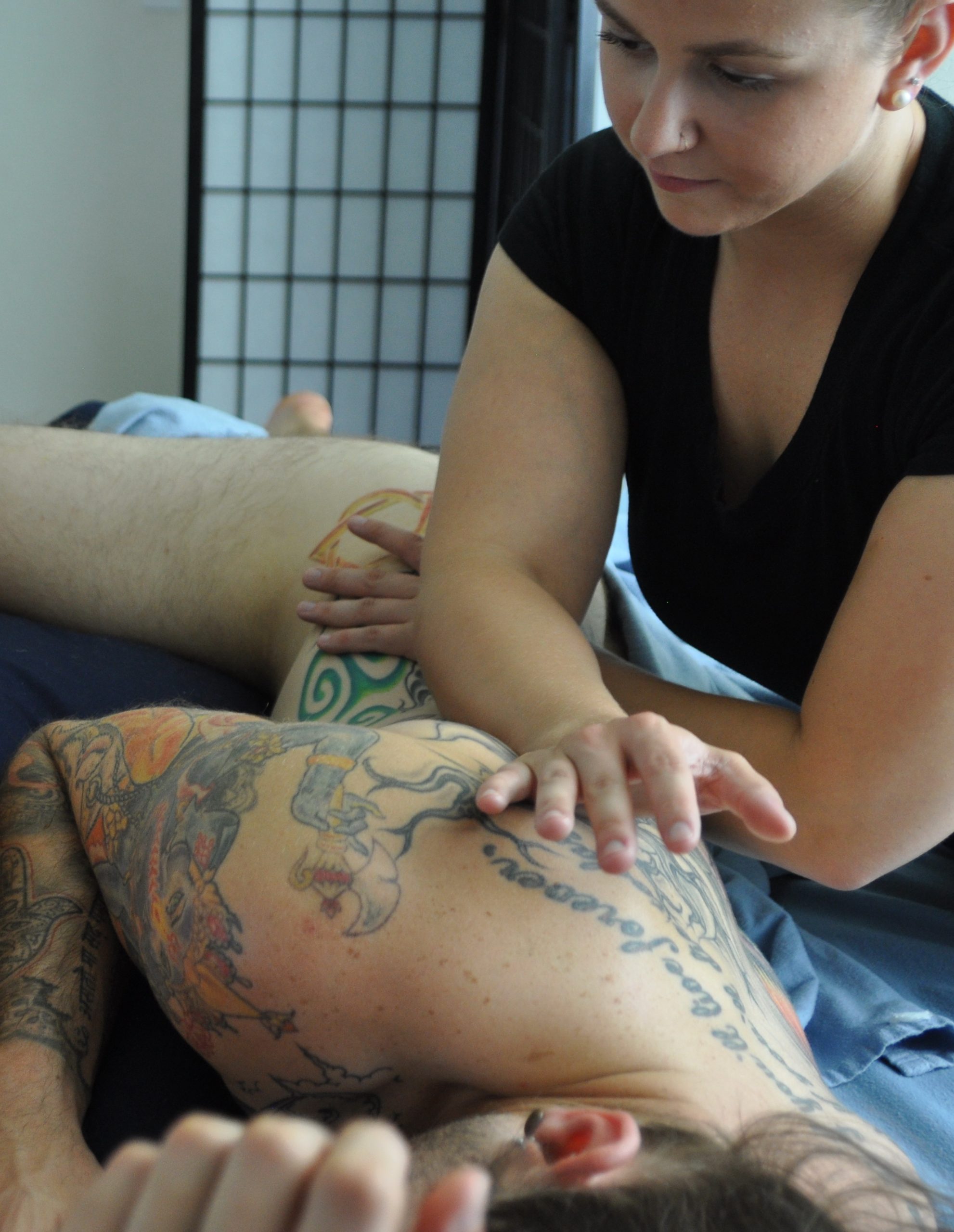
Massage can help the hamstrings let go without forcing them. Slow, steady pressure through the back of the thigh, combined with work on the glutes, hips, low back and calves, addresses the whole chain that has been leaning on them. Clients are often surprised that the hamstrings soften most after the hips and back have been worked. The goal is not more stretching. It is backup, so the hamstrings no longer have to do everything alone.
When to seek medical evaluation
A sudden sharp pain or popping feeling in the back of the thigh during activity, bruising, difficulty walking, or pain that does not improve should be checked by a healthcare provider, since these can be signs of a strain or tear. Numbness, tingling, or pain that travels down the leg also deserves evaluation. Massage can support recovery and comfort, but it is not a substitute for diagnosis or rehabilitation of an injury.
Learn more from trusted health sources
For more about the hamstrings and hamstring injuries, start with these resources:
A thoughtful next step
If this description sounds familiar, a personalized massage session may help you explore the larger pattern rather than only chasing the sorest spot. Massage Reimagined offers thoughtful, whole-body massage in Seattle with locations in Lower Queen Anne, Fremont, and Magnolia.
Your muscles have been trying to get your attention. Maybe it is time to listen. Schedule Now