Stability Without Constant Bracing
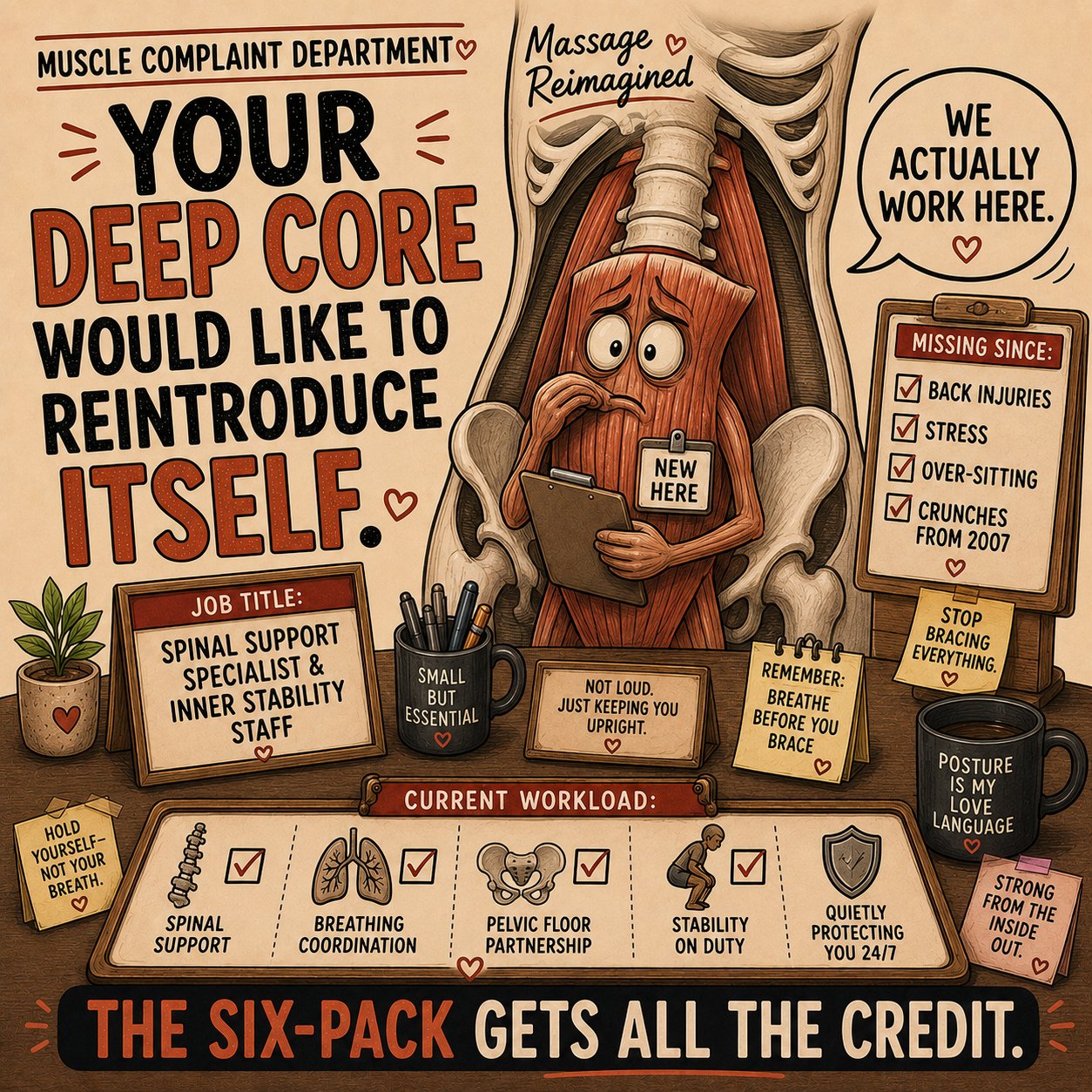
The deep core muscles are stabilizers, not superheroes. They include structures such as the diaphragm, pelvic floor, deep abdominal muscles, and small spinal stabilizers that coordinate pressure and support through the trunk. Unlike the visible six-pack muscles, their most important work is subtle. They help you breathe, transfer force, adjust to movement, and create enough stability for the task without making the entire body rigid.
The deep core is a team, not a single muscle
Core stability is often confused with constant tightening. People are told to pull the stomach in, brace hard, or keep the abdominals engaged all day. That strategy may be useful for a heavy lift or a specific exercise, but it is not an ideal resting state. A responsive core should be able to increase support, reduce support, and adapt from moment to moment.
Stability is not the same as stiffness
Constant bracing can restrict breathing and increase pressure downward toward the pelvic floor. It may also make the low back, hip flexors, and QL work harder. Some people feel more secure when they hold the abdomen tightly, especially after pain or injury, but the price of that security may be reduced movement and increased fatigue.
Why constant bracing can backfire
The best core is not always the strongest. It is the one that coordinates well. Strength without timing may lead to more tension, while coordination allows effort to be distributed. Breathing is central because the diaphragm changes pressure through the trunk with every breath. If breathing is shallow or held, the core may rely more heavily on gripping strategies.
How massage can support better coordination
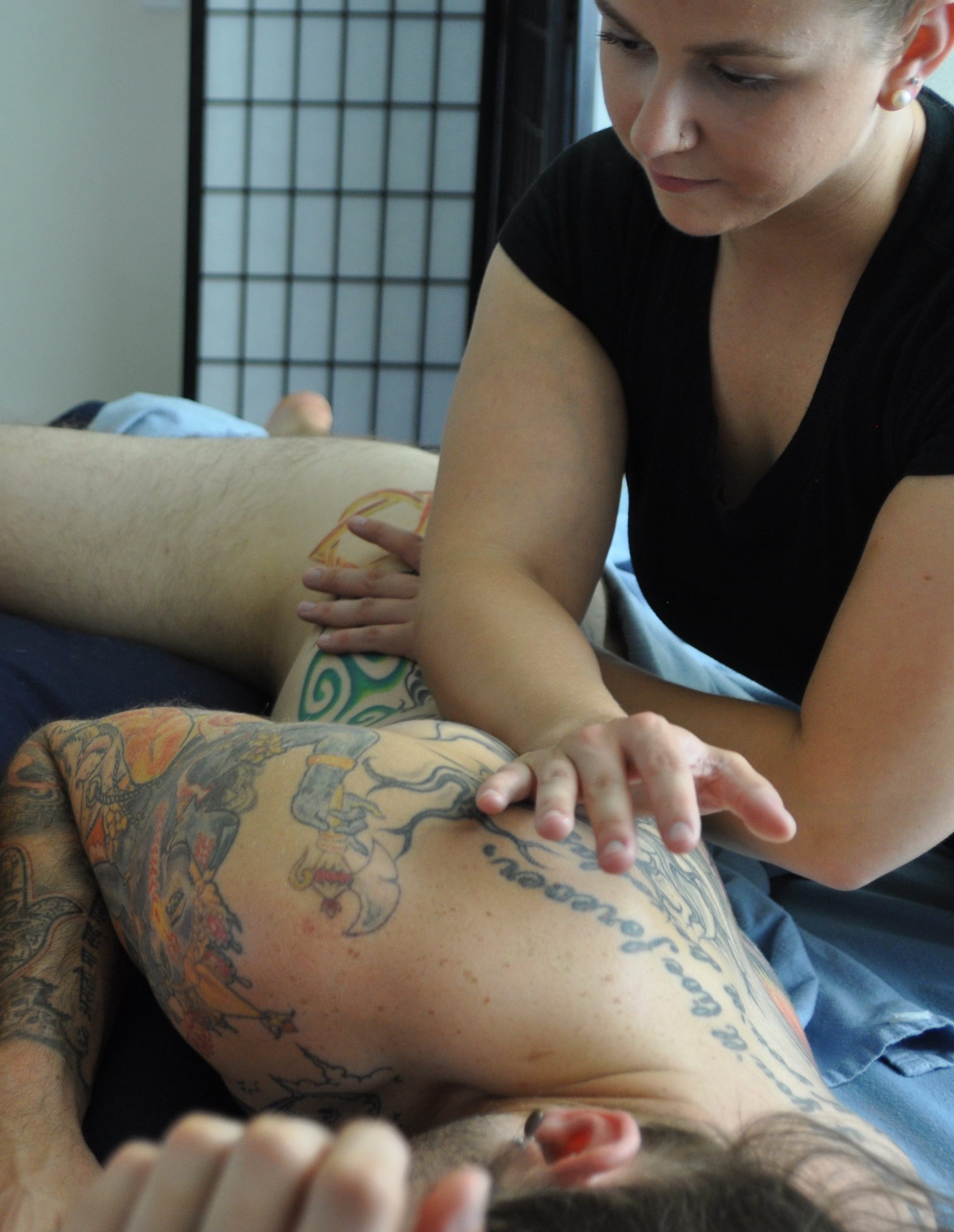
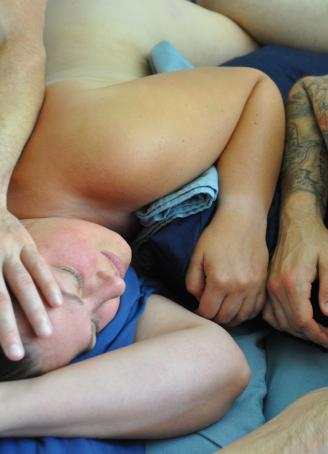
Deep core massage in Seattle does not mean forceful pressure into the abdomen. Abdominal and rib work should be gentle, clearly explained, and performed only with consent. A whole-body session may address the rib cage, hips, low back, glutes, and breathing mechanics to help the trunk feel supported without being locked down. Some clients benefit from side-lying or supported positions that reduce the need to brace.
Massage cannot teach core coordination by itself, but it can create a window in which movement feels safer and less guarded. Combined with appropriate exercise or rehabilitation, it may help a person experience stability as something dynamic rather than rigid. Your deep core does not need to prove itself by working at maximum effort all day. It needs the freedom to engage when needed and let go when the task is over.
When to seek professional evaluation
Persistent abdominal, pelvic, or low-back symptoms should not automatically be labeled a weak core. Pain, pressure, bulging, bowel or bladder changes, neurologic symptoms, and problems following surgery or pregnancy may require medical or physical therapy assessment. A qualified professional can help determine whether the issue involves strength, coordination, breathing, load management, or another condition. More bracing is not always the safest answer.
Learn more from trusted health sources
These resources offer practical context about core function and rehabilitation for low-back symptoms:
A thoughtful next step
If this description sounds familiar, a personalized massage session may help you explore the larger pattern rather than only chasing the sorest spot. Massage Reimagined offers thoughtful, whole-body massage in Seattle with locations in Lower Queen Anne, Fremont, and Magnolia.
Your muscles have been trying to get your attention. Maybe it is time to listen. Schedule Now