Why Whole-Body Massage Looks Beyond the Painful Spot
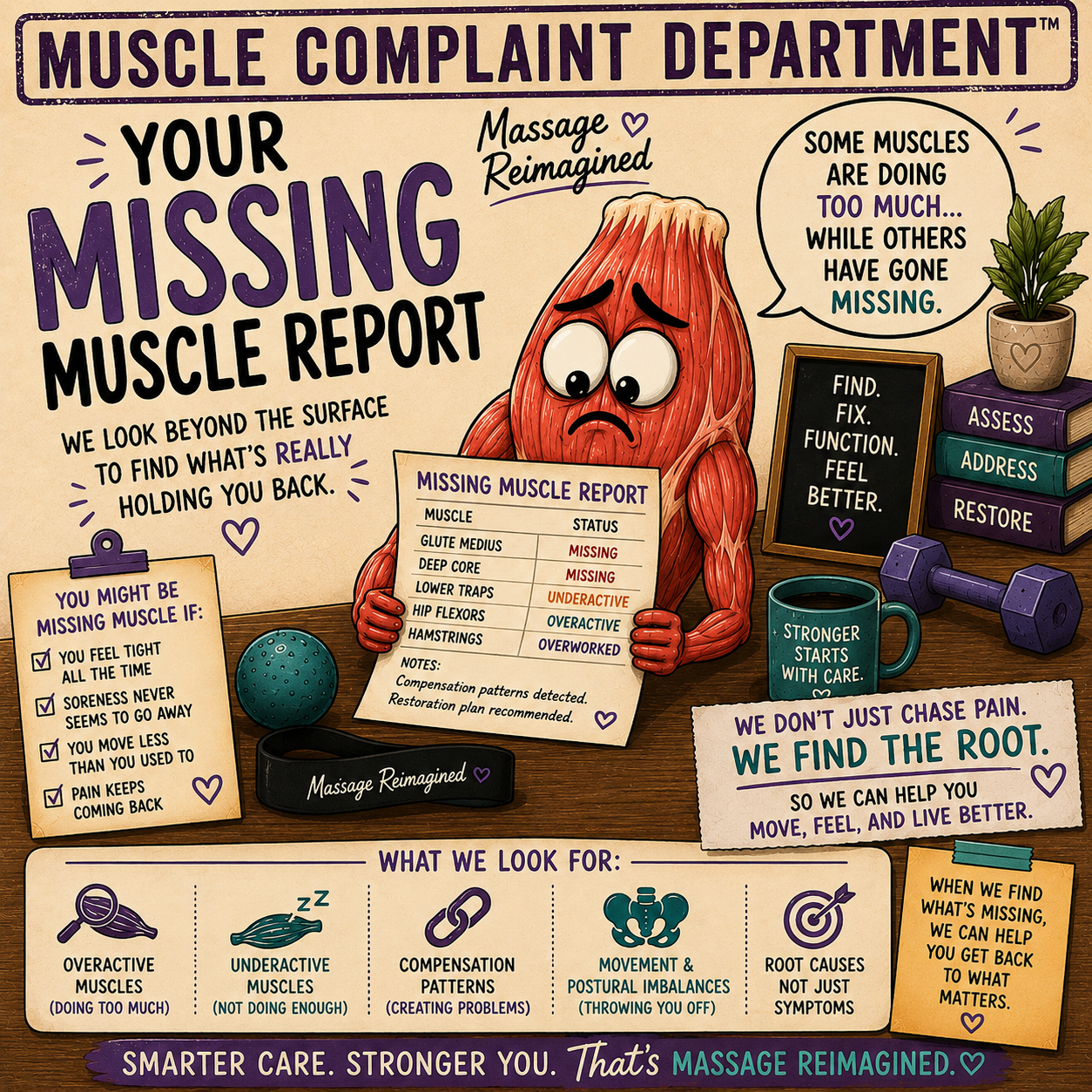
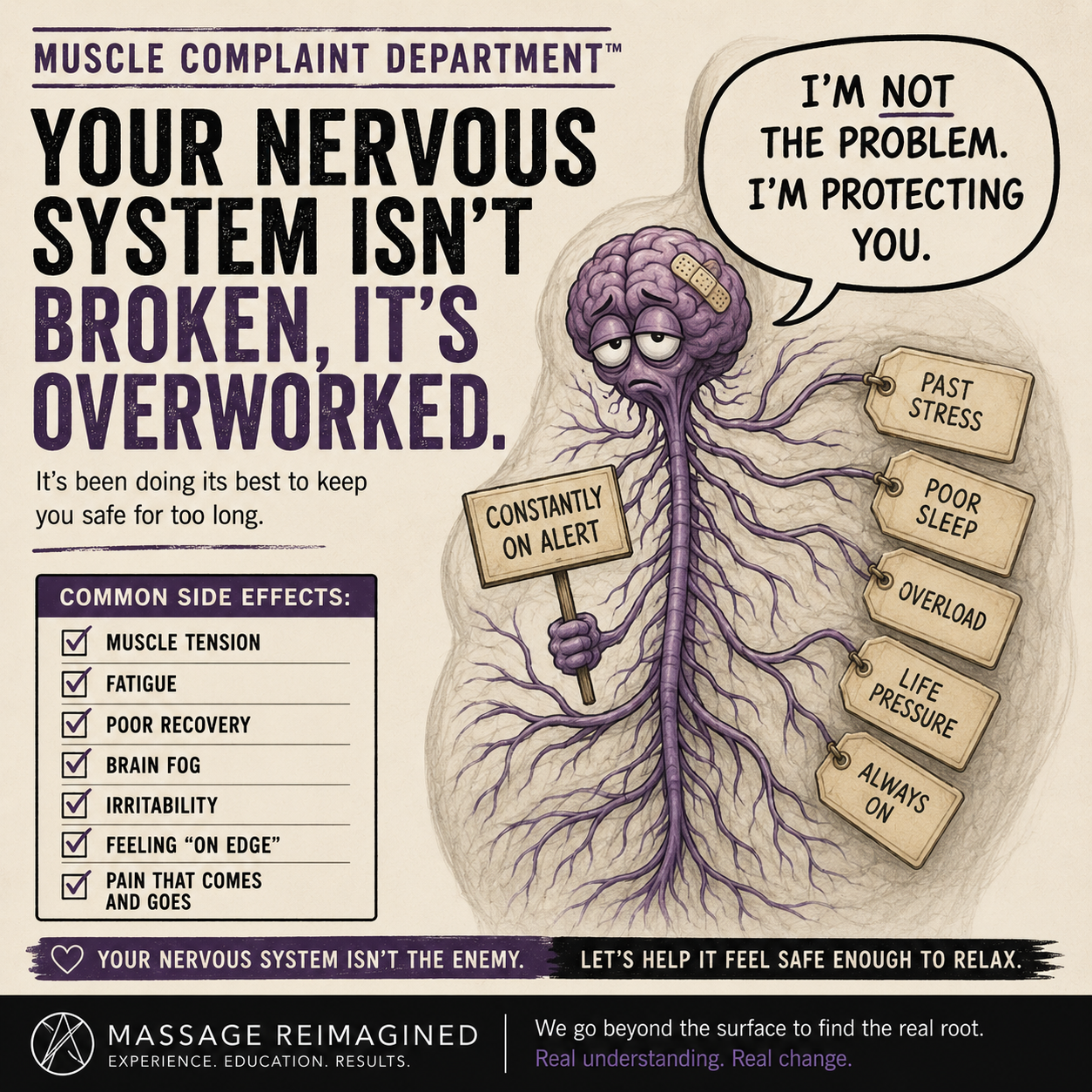
Clients often ask, ‘What muscle is causing my pain?’ It is a reasonable question, but the answer is frequently more complicated than naming one structure. The muscle that hurts may be working too hard because another region is not contributing. It may be protecting an irritated joint, responding to a breathing pattern, or bracing because the nervous system does not feel safe enough to reduce tension.
The painful muscle may be the messenger
Bodies operate as systems. When one area loses movement, strength, confidence, or coordination, another area often adapts. That adaptation is not automatically a problem. Compensation is one of the body’s greatest strengths. It allows you to keep walking after an ankle sprain, keep working despite fatigue, and protect an area while it heals. The difficulty comes when a temporary solution becomes the permanent job description.
Bodies solve problems through compensation
The shoulder may complain because the rib cage is not moving well. The low back may complain because the hips are not sharing load. The neck may complain because the jaw and breathing muscles remain guarded. The calves may tighten because the ankles lack mobility. These relationships do not mean there is one hidden ‘root cause’ that can always be found and corrected. Pain is influenced by many factors, and certainty is often less honest than careful exploration.
Why chasing the sore spot can miss the relationship
Chasing the sore spot can still provide relief, but it may not change the workload that created the complaint. A therapist who repeatedly presses the same knot without asking why it returns is treating the final stop in the chain. Whole-body massage looks for the missing relationship: which areas are overworking, which areas are underparticipating, and which movements or breathing patterns feel unavailable.
What whole-body massage actually means
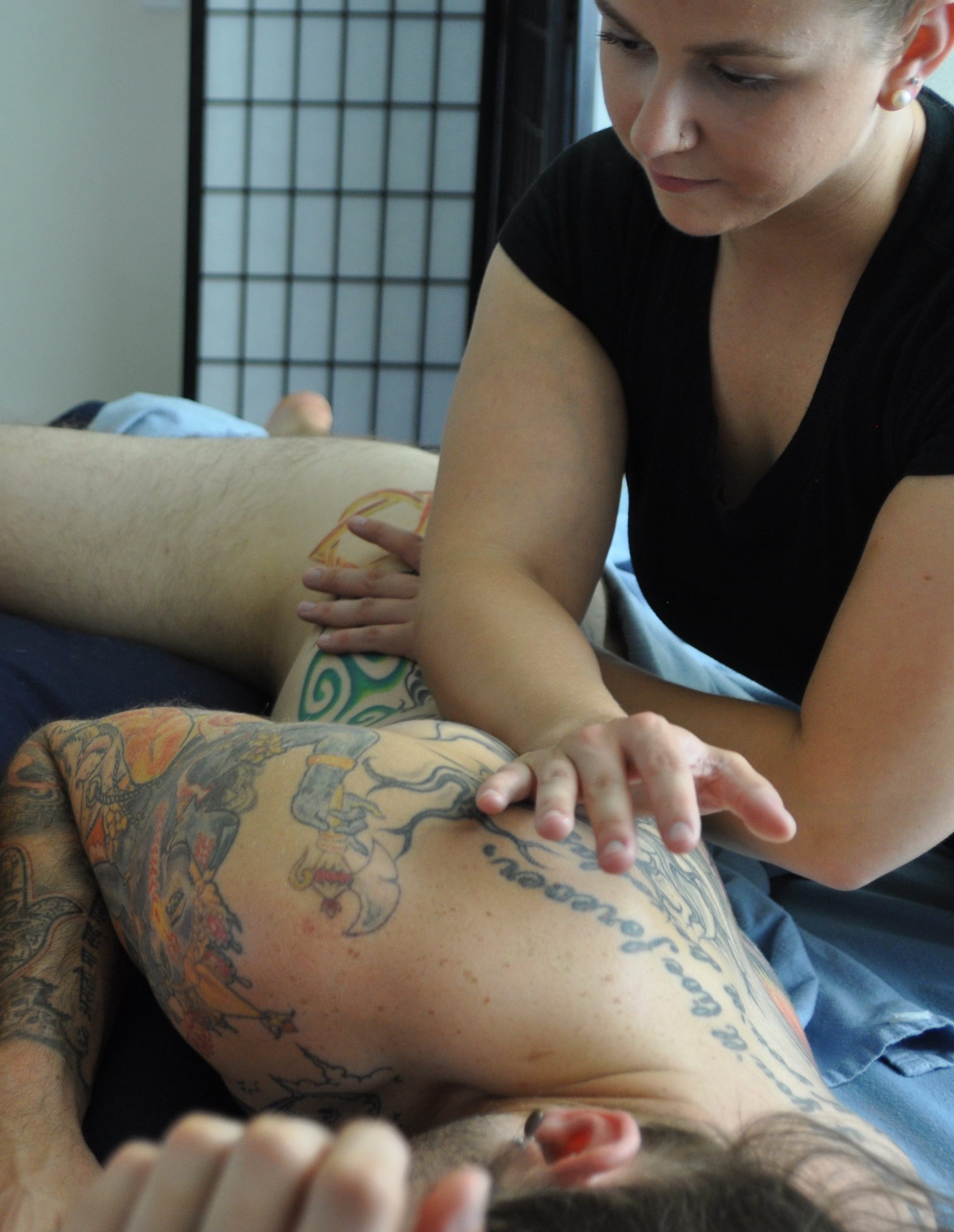
Whole-body does not mean every inch receives equal time. It means the session is guided by relationships rather than a rigid list of body parts. Work on the feet may be relevant to the knees. Rib mobility may matter to the shoulder. Gluteal tension may relate to the low back. The therapist and client decide together where attention is most useful, with clear consent and ongoing feedback.
The final report is simple: the body is smarter and more connected than most people realize. Massage cannot guarantee that it will discover a single missing muscle or eliminate every source of pain. It can help reduce guarding, improve body awareness, and create more options for movement. Sometimes the most meaningful change begins when we stop asking which part is broken and start asking how the parts are trying to help one another.
When to seek professional evaluation
Looking beyond the painful spot is useful, but pain is not always the end of a compensation chain and there is not always a single hidden root cause. Pain is shaped by tissue health, workload, sleep, stress, prior experience, medical conditions, and many other factors. Symptoms that are severe, unexplained, worsening, or accompanied by neurologic or systemic warning signs deserve medical evaluation. Whole-body thinking should broaden our curiosity, not create certainty that the painful area is innocent.
Learn more from trusted health sources
These resources provide a broader evidence-based view of pain and the role massage may play within a larger care plan:
A thoughtful next step
If this description sounds familiar, a personalized massage session may help you explore the larger pattern rather than only chasing the sorest spot. Massage Reimagined offers thoughtful, whole-body massage in Seattle with locations in Lower Queen Anne, Fremont, and Magnolia.
Your muscles have been trying to get your attention. Maybe it is time to listen. Schedule Now