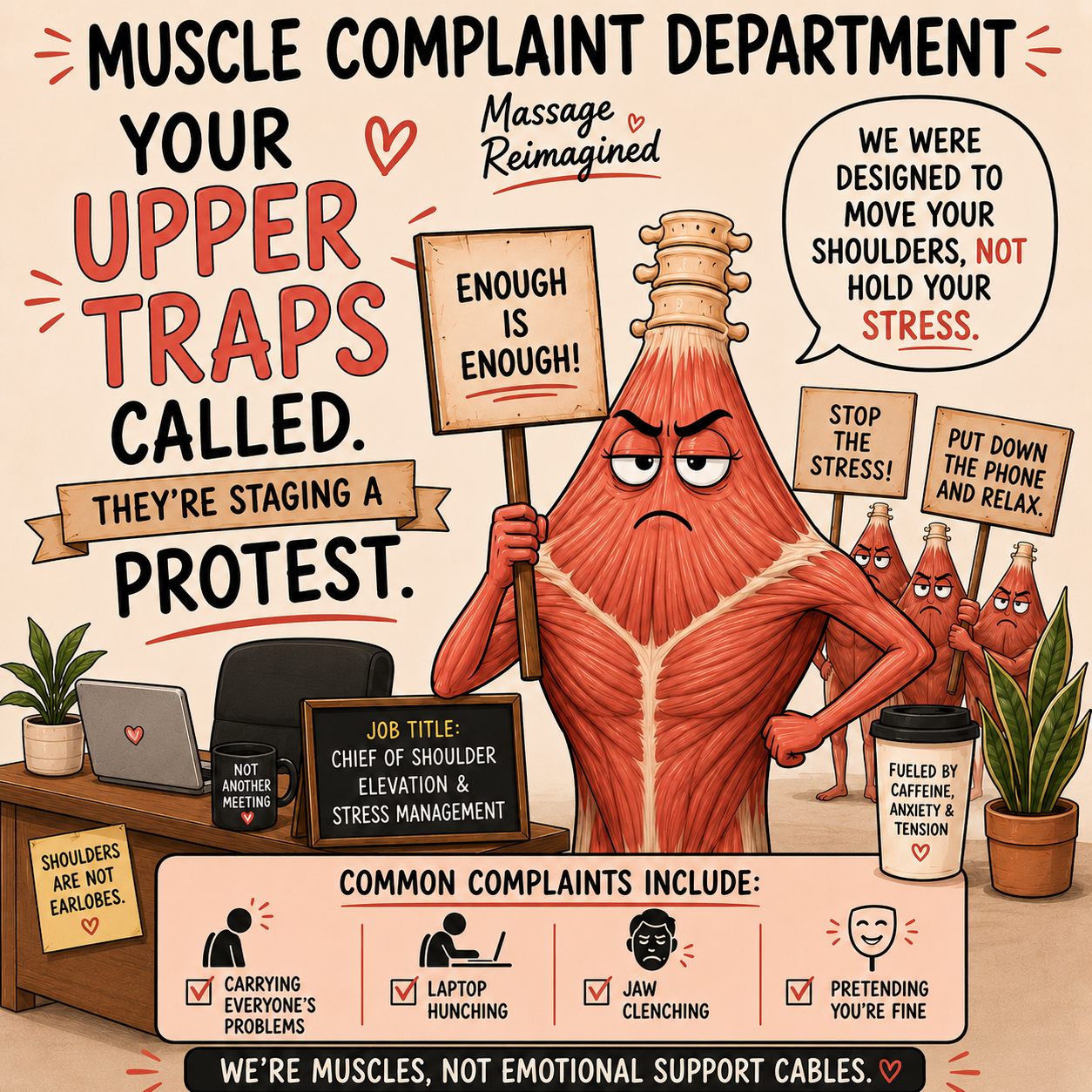
Your upper traps called. They’re staging a protest.
The upper trapezius muscles, the ones that slope from the base of your skull out to the tops of your shoulders, have a clear message: they were designed to move your shoulders, not to hold your stress. Yet they are where many people carry the weight of a long workday, a tense conversation, or hours of laptop work. Upper trap massage in Seattle is one of the most requested kinds of focused work at our three locations, and for good reason.
What the upper traps actually do
The trapezius is a large, kite-shaped muscle that covers much of the upper back. Its upper fibers help lift the shoulder blades, tilt and turn the head, and work with other muscles to raise the arms overhead. They are strong and busy, but they are meant to work in short bursts and then rest.
Why the upper traps stay switched on
When we feel stressed, the shoulders tend to creep up toward the ears. When we sit at a laptop, the head drifts forward and the arms reach toward the keyboard, and the upper traps help hold everything in place. Phone use, carrying a bag on one shoulder, and clenching the jaw can add to the load. Stress breathing, when the chest and neck do the work instead of the diaphragm, recruits these muscles too.
Over time, the upper traps can start doing jobs that belong to other muscles, such as the lower trapezius and the muscles around the shoulder blades. They end up as the chief of shoulder elevation and stress management, a job title nobody would apply for.
What overworked upper traps can feel like
Common complaints include a dull ache across the tops of the shoulders, tender spots that feel like knots, stiffness when turning the head, tension headaches that seem to start at the base of the skull, and shoulders that do not drop even when you try to relax them. The levator scapulae and the scalenes are often involved as well.
How massage may help
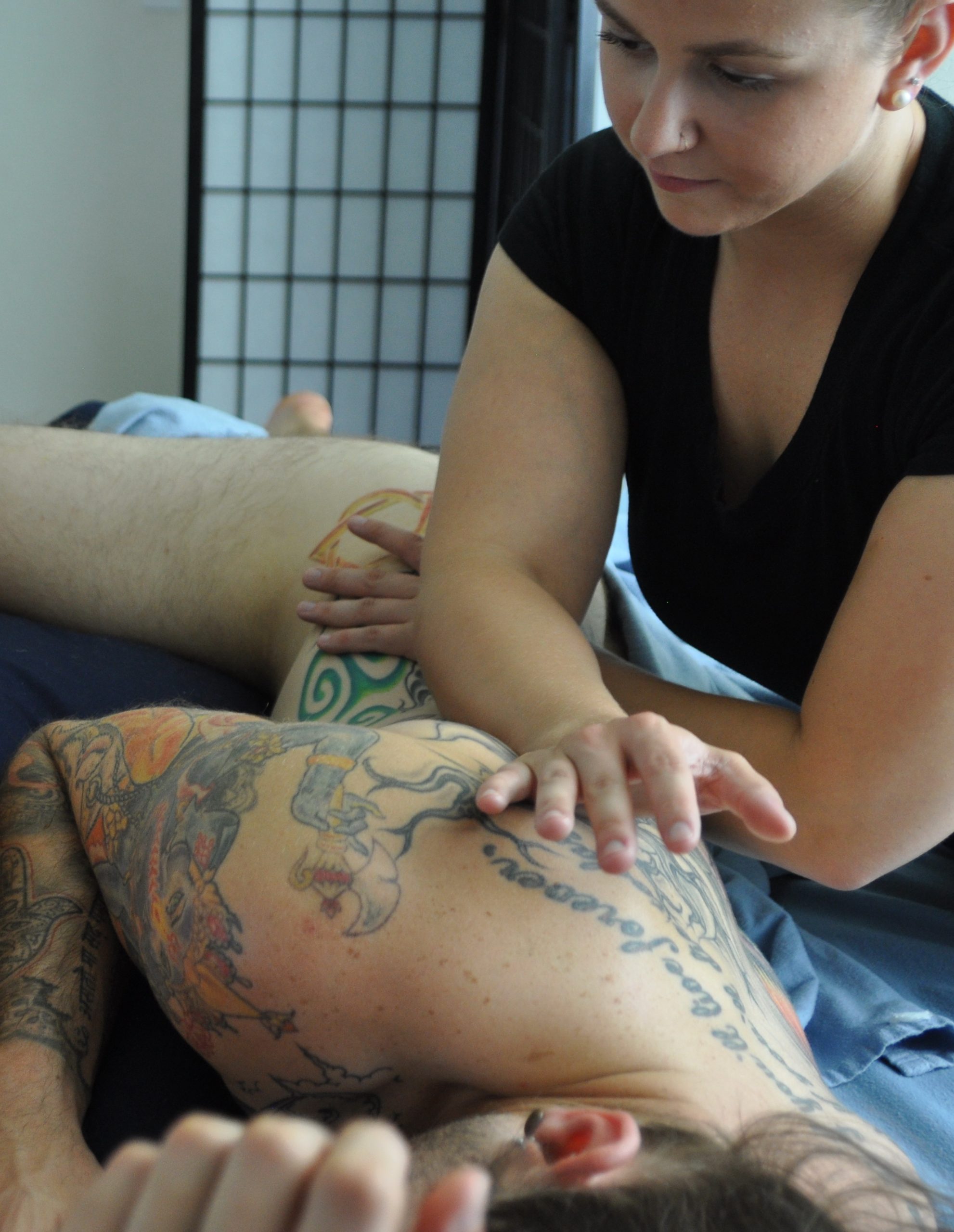
Massage can help the upper traps release the tension they have been holding, and it works best when the session looks at the whole neighborhood: the neck, the jaw, the chest, the mid back and the muscles that should be sharing the load. Slow, sustained pressure tends to work better than quick, hard pressure on these muscles, which can respond to force by guarding even more. Many clients notice that their shoulders sit lower and their breathing feels easier by the end of the session.
Between sessions, small changes help: raising the screen, setting down the bag, and checking a few times a day whether your shoulders have crept toward your ears. They are muscles, not emotional support cables.
When to seek medical evaluation
Neck pain after a fall or accident, pain that travels down the arm, numbness, tingling or weakness in the arms or hands, severe headaches, or neck pain with fever should be evaluated by a healthcare provider. Massage can support comfort and relaxation, but it is not a substitute for diagnosis when symptoms suggest a nerve or joint problem.
Learn more from trusted health sources
For more about the trapezius and common causes of neck and shoulder pain, start with these resources:
A thoughtful next step
If this description sounds familiar, a personalized massage session may help you explore the larger pattern rather than only chasing the sorest spot. Massage Reimagined offers thoughtful, whole-body massage in Seattle with locations in Lower Queen Anne, Fremont, and Magnolia.
Your muscles have been trying to get your attention. Maybe it is time to listen. Schedule Now