Your adductors are tired of holding it all together
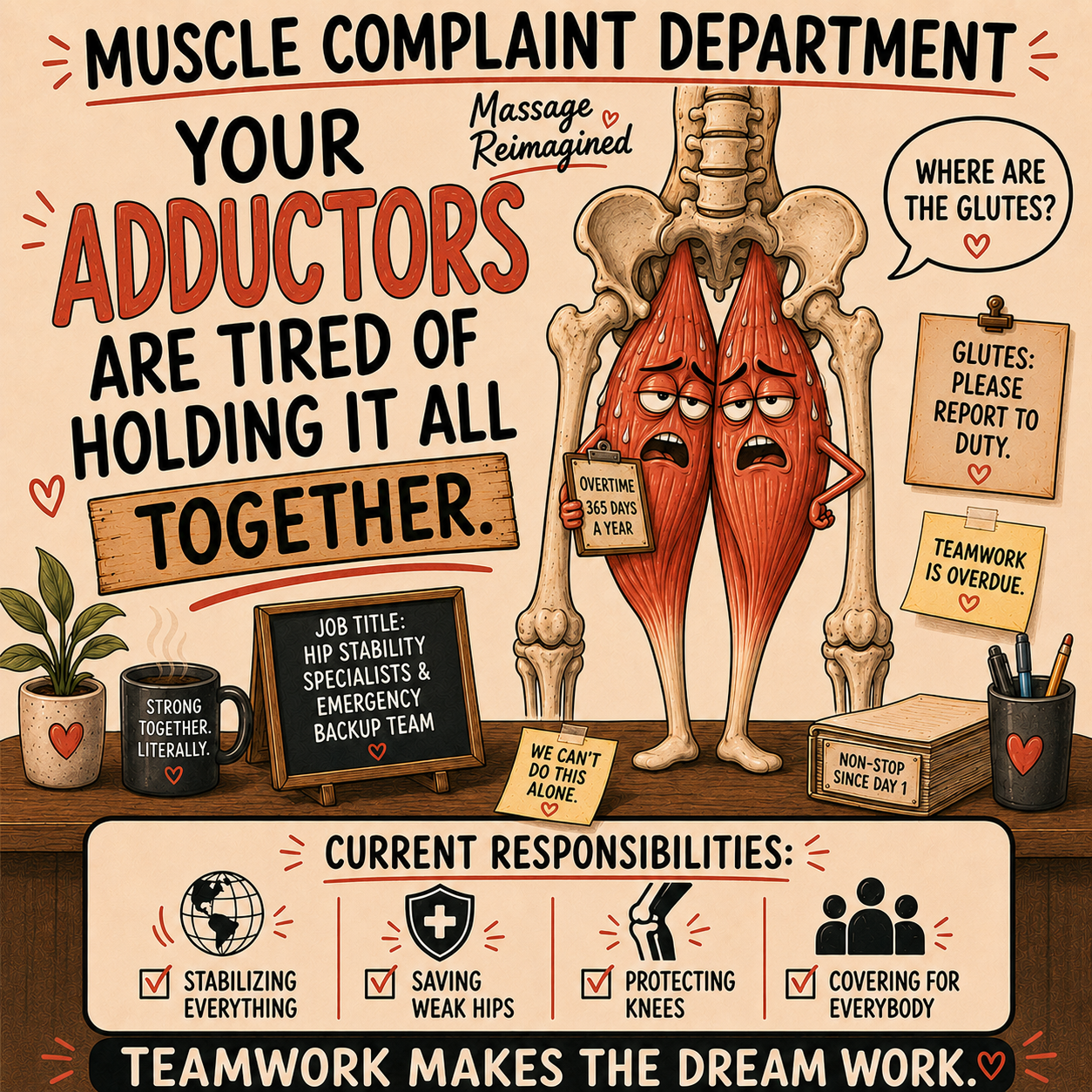
The adductors are the muscles of the inner thigh, and they have a complaint: they have been covering for everybody. Their official job is to bring the legs together, but in daily life they also help steady the pelvis, protect the knees, and keep you balanced on one leg every time you take a step. When other hip muscles are not pulling their weight, the adductors work overtime. Adductor massage in Seattle is less familiar to many clients, yet it is often the missing piece in stubborn hip tension.
What the adductors actually do
The adductor group includes several muscles that run from the front and bottom of the pelvis down the inside of the thigh bone. Besides pulling the legs inward, they help flex and extend the hip, assist with rotation, and work with the glutes to keep the pelvis level while you walk, run, climb stairs or change direction.
Why the adductors end up working overtime
When the glutes, especially the muscles on the side of the hip, are underused, the adductors often step in to stabilize the pelvis. Long hours of sitting, standing with weight shifted to one leg, and sports that involve quick changes of direction or kicking can add to the load. The adductors are also closely connected to the pelvic floor, the SI joint, and the hamstrings, so tension in one area often shows up in the others.
Stress may play a part too. Gripping the legs together, like clenching the jaw or bracing the belly, is one of the quiet ways the body tries to feel stable.
What overworked adductors can feel like
People describe tightness along the inner thigh, a pulling feeling in the groin when they take a long stride, hips that feel stiff when they open the legs, discomfort along the inside of the knee, or a sense that the hips never fully settle. Because the area is rarely stretched or massaged, many people do not realize how much tension they are holding there until it is addressed.
How massage may help
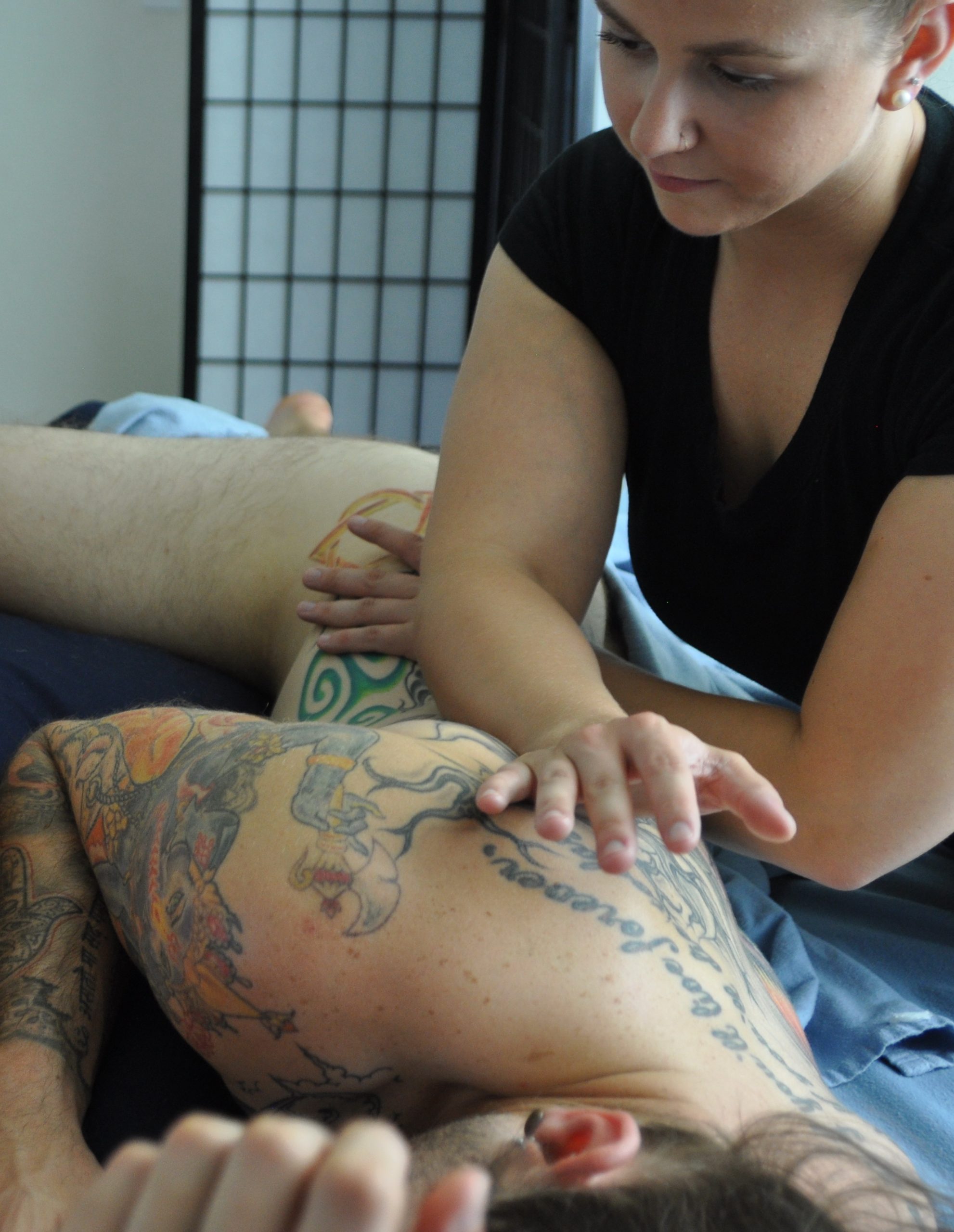
Massage can help the adductors let go, and it works best alongside work on the glutes, hips, low back and hamstrings, so the whole team can share the load again. Inner thigh work is always done with clear consent, careful draping and respect for boundaries. Your therapist will explain what they plan to do and check in about pressure and comfort, and you can ask to skip or stop this area at any time.
When the adductors no longer have to hold everything together, clients often notice that their stride feels longer and their hips feel more open. Teamwork makes the dream work.
When to seek medical evaluation
Sudden groin pain during activity, a popping sensation, bruising on the inner thigh, pain that makes walking difficult, or groin pain that lasts more than a few days should be checked by a healthcare provider. Groin pain can also come from the hip joint, a hernia or other conditions that need diagnosis. Massage can support comfort and easier movement, but it is not a substitute for medical evaluation or rehabilitation.
Learn more from trusted health sources
For more about the inner thigh muscles and groin injuries, start with these resources:
A thoughtful next step
If this description sounds familiar, a personalized massage session may help you explore the larger pattern rather than only chasing the sorest spot. Massage Reimagined offers thoughtful, whole-body massage in Seattle with locations in Lower Queen Anne, Fremont, and Magnolia.
Your muscles have been trying to get your attention. Maybe it is time to listen. Schedule Now