Stability, Load Transfer, and Pelvic Tension
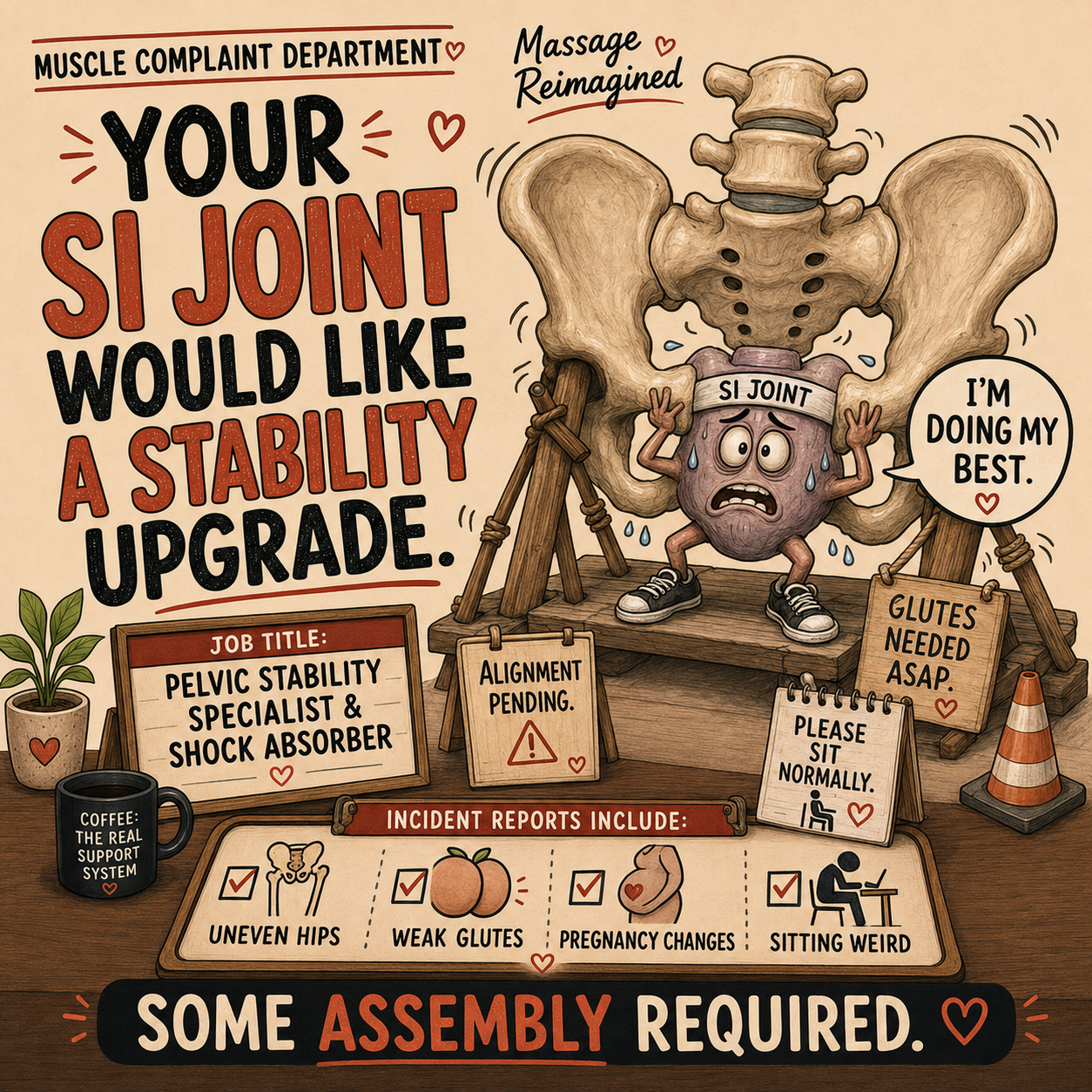
The sacroiliac, or SI, joint sits where the sacrum meets the pelvis. It moves only a small amount, but it plays an important role in transferring force between the spine and legs. Because discomfort in this area can be sharp, one-sided, and difficult to describe, the SI joint often gets blamed for any pain near the back of the pelvis.
The SI joint is small but important
Many people are told that the joint is ‘out of place’ or that one side of the pelvis is permanently rotated. Reality is usually more nuanced. The SI joint is supported by strong ligaments and is designed for stability. Small positional differences are common and do not automatically explain pain. Symptoms can arise from the joint itself, surrounding muscles, referred pain, altered movement, pregnancy-related changes, or other low-back and hip conditions.
Why ‘out of alignment’ is usually too simple
Muscular coordination matters because the body must transfer load across the pelvis with every step. The glutes, deep abdominal muscles, pelvic floor, back muscles, and hip rotators all contribute. If one part of the system is fatigued or guarded, other structures may increase their effort. The SI region can then feel unstable even when the joint is not literally displaced.
Muscles help transfer load across the pelvis
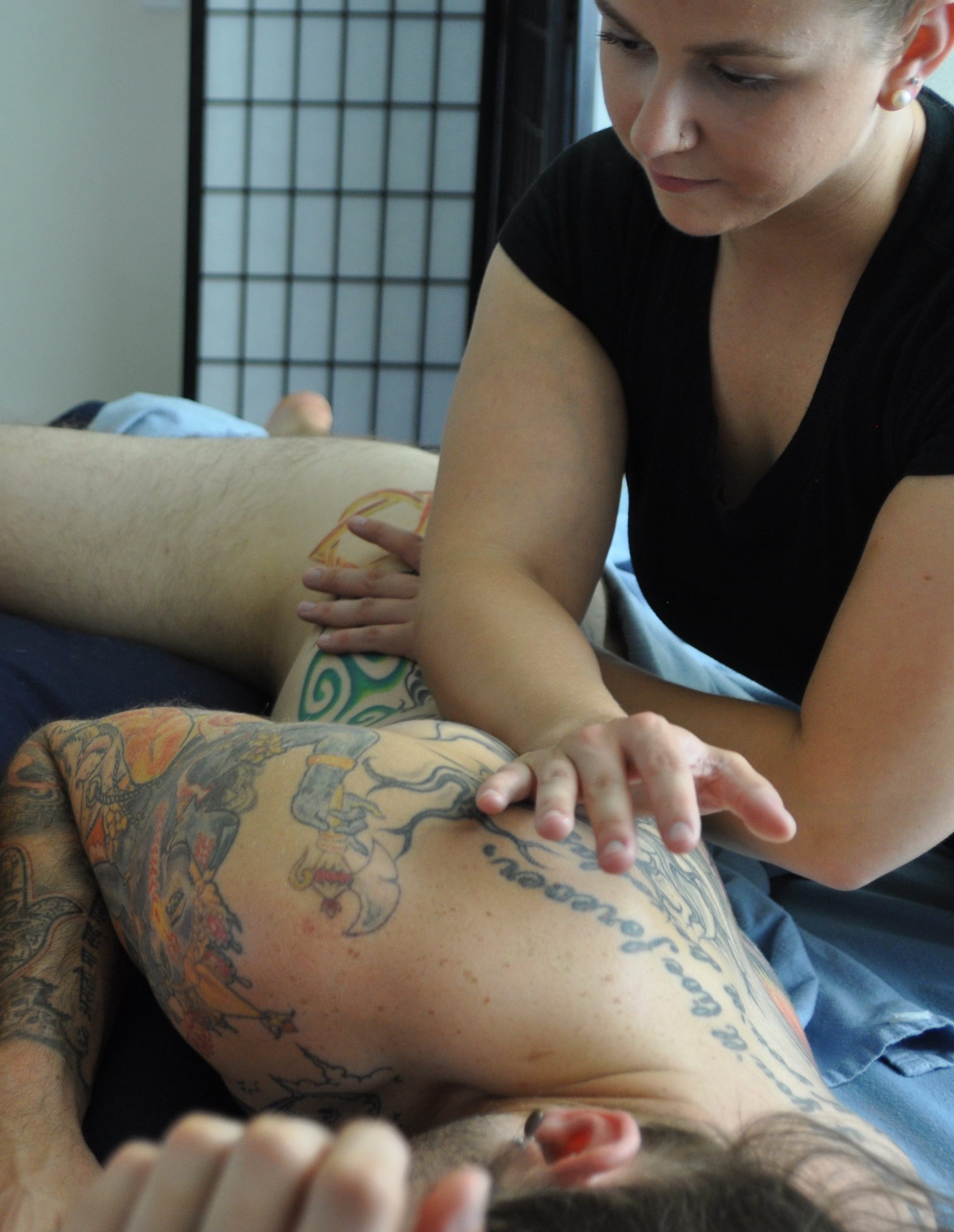
SI joint massage in Seattle generally focuses on the tissues around the joint rather than trying to push the joint back into place. A therapist may work with the glutes, low back, QL, hip rotators, hamstrings, abdominal wall, and rib cage. Gentle movement and positional changes can help identify where the body feels supported and where it braces.
How massage may support comfort around the SI joint
Massage may reduce muscular guarding and make it easier to move, but persistent or severe pain should be evaluated. Symptoms following trauma, new weakness or numbness, bowel or bladder changes, fever, or unexplained weight loss require medical attention. During pregnancy or postpartum recovery, pelvic health and medical providers can offer specialized guidance.
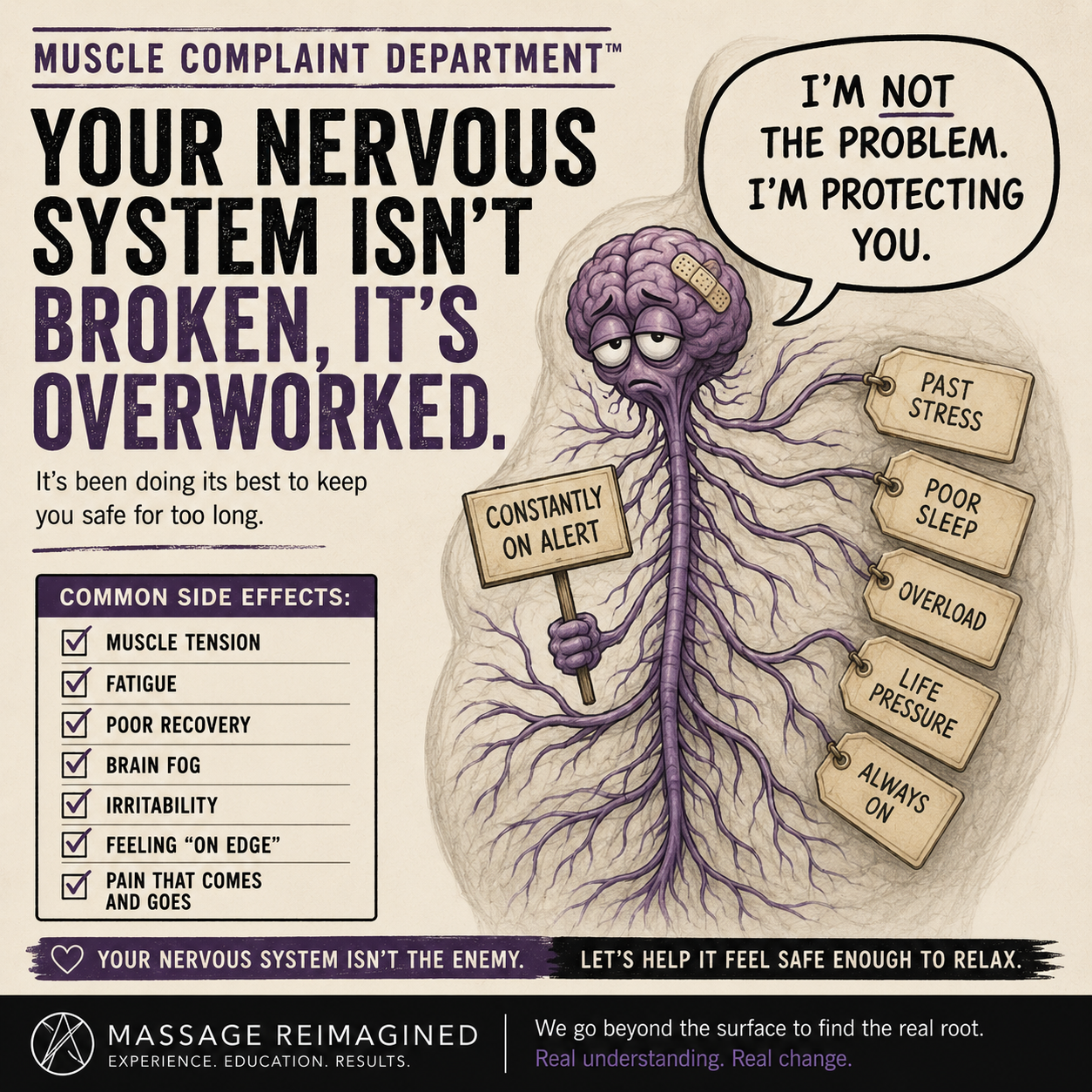
The SI joint moves, just not very much. It does not need to be forced into a perfect position. It needs coordinated support, adaptable movement, and surrounding tissues that are not working in a constant state of alarm. A thoughtful whole-body massage can help reduce the noise around the joint and give the pelvis a more comfortable way to transfer load.
When to seek professional evaluation
Pain near the SI joint can resemble symptoms from the lumbar spine, hip, muscles, or other pelvic structures. Evaluation is important when pain follows trauma, is severe, occurs with fever or unexplained weight loss, includes neurologic changes, or persists despite conservative care. No one can reliably determine that the SI joint is ‘out’ simply by looking at posture or leg length. Treatment should focus on function and the most likely contributors rather than fear-based alignment claims.
Learn more from trusted health sources
These resources explain sacroiliac pain, sacroiliitis, and the range of symptoms that can occur in this region:
A thoughtful next step
If this description sounds familiar, a personalized massage session may help you explore the larger pattern rather than only chasing the sorest spot. Massage Reimagined offers thoughtful, whole-body massage in Seattle with locations in Lower Queen Anne, Fremont, and Magnolia.
Your muscles have been trying to get your attention. Maybe it is time to listen. Schedule Now