Clenching, TMJ Tension, and the Stress Connection
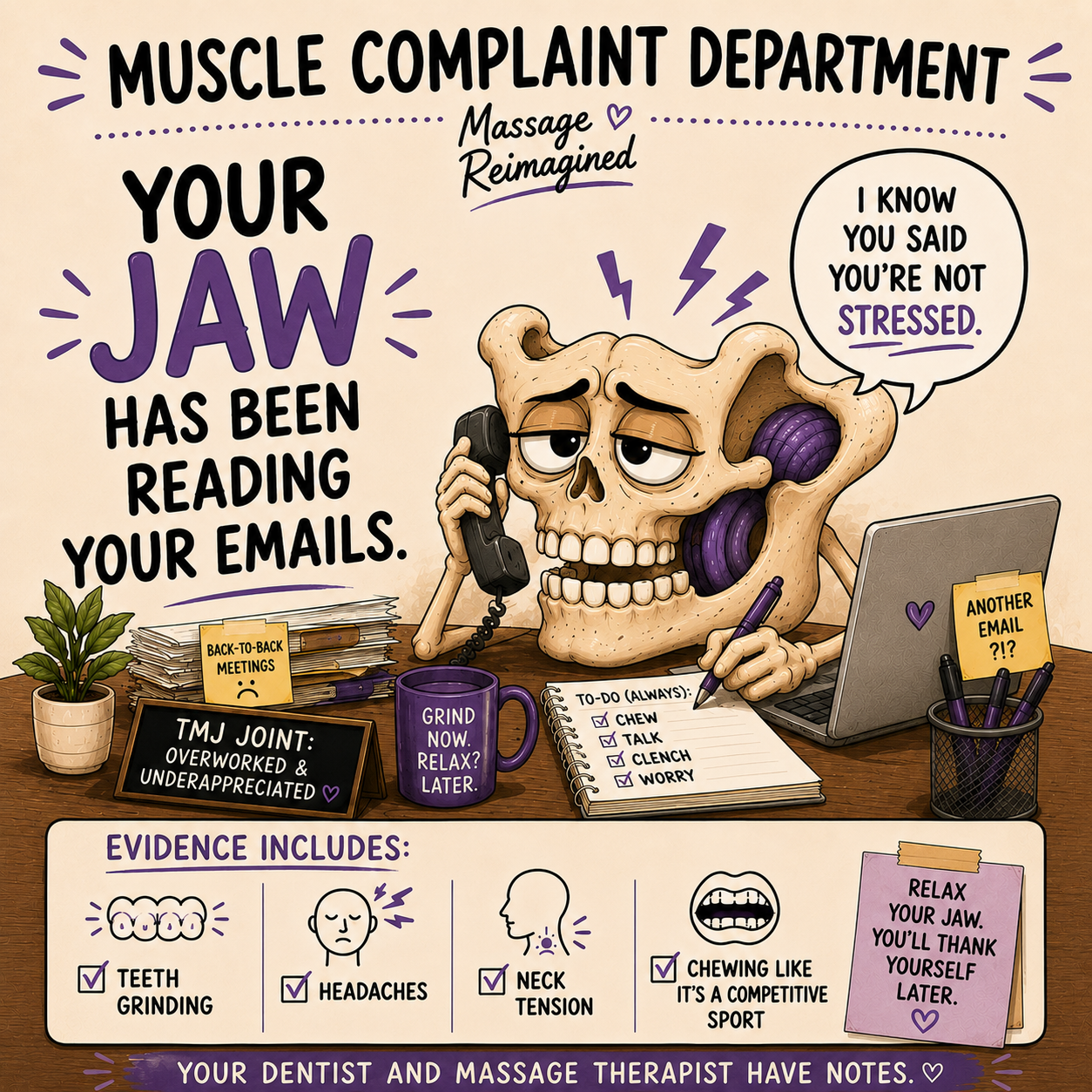
The jaw is one of the body’s most powerful and emotionally expressive regions. It helps us chew, speak, yawn, and communicate, but it also reacts quickly to concentration, frustration, anxiety, and overwhelm. Many people clench their teeth during the day without realizing it, while others grind at night. By the time they search for jaw massage in Seattle, they may also be experiencing headaches, facial fatigue, neck tension, or tenderness around the temporomandibular joint.
Why the jaw holds so much tension
The primary closing muscles of the jaw include the masseter and temporalis, with deeper muscles helping guide movement. These structures must coordinate with the tongue, throat, face, and upper neck. The temporomandibular joints themselves are small and complex, and their movement is influenced by dental structure, habits, breathing, stress, injury, and the nervous system.
Clenching can happen without awareness
Clenching often becomes automatic. People may press their teeth together while driving, answering email, lifting weights, or trying to stay composed in a difficult conversation. Because the effort is subtle, the muscles can accumulate hours of workload without the person noticing. Nighttime grinding may add even more demand, and poor sleep can make the nervous system more reactive the following day.
The jaw, neck, and nervous system work together
Jaw tension rarely exists in isolation. The upper neck, shoulders, scalenes, and muscles around the skull often participate. Some people hold the tongue rigidly or breathe through the mouth, while others keep the chin slightly forward for long periods at a screen. When one part of the system stays guarded, neighboring areas often help maintain the same pattern.
What jaw massage may include
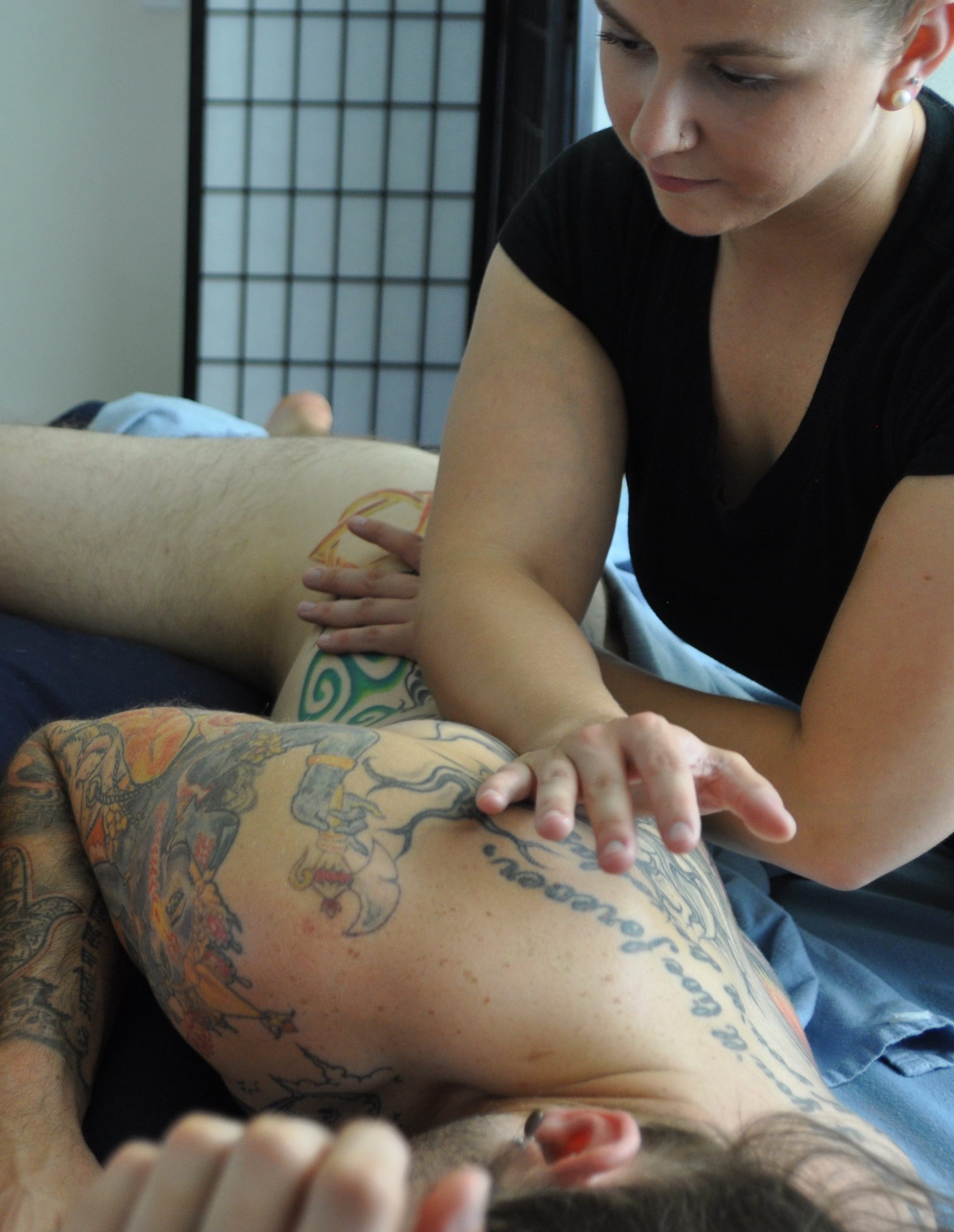
Jaw massage may include the face, temples, scalp, neck, shoulders, and upper chest. External work can be very effective, and some specially trained therapists also offer intraoral massage with gloves and explicit consent. Intraoral work is never something that should happen unexpectedly. The therapist should explain the technique, obtain permission, and provide a clear way to pause or stop at any time.
Massage may help reduce muscular guarding, improve awareness of clenching habits, and make it easier for the jaw to rest. It does not replace dental or medical evaluation for persistent locking, significant joint pain, trauma, infection, or changes in the bite. Sometimes the most useful lesson is simply noticing that your teeth do not need to touch unless you are chewing or swallowing. None of those conversations required clenching.
When to seek professional evaluation
Jaw pain deserves dental or medical evaluation when it is persistent, limits opening or closing, follows trauma, includes facial swelling, causes significant tooth damage, or is accompanied by locking or a sudden change in the bite. Jaw discomfort can involve the joint, chewing muscles, teeth, sinuses, nerves, or other structures. Massage may help some muscular components, but it should complement rather than replace appropriate dental or medical care.
Learn more from trusted health sources
For a clearer explanation of temporomandibular disorders and teeth grinding, these are especially useful resources:
A thoughtful next step
If this description sounds familiar, a personalized massage session may help you explore the larger pattern rather than only chasing the sorest spot. Massage Reimagined offers thoughtful, whole-body massage in Seattle with locations in Lower Queen Anne, Fremont, and Magnolia.
Your muscles have been trying to get your attention. Maybe it is time to listen. Schedule Now