Relief for Typing, Scrolling, Gripping, and Repetitive Work
Your forearms perform thousands of small tasks every day. Typing, texting, scrolling, driving, lifting, carrying, gripping, cooking, gaming, and using tools all require repeated coordination between muscles that move the wrist, fingers, thumb, and elbow. Because the effort is often light, people underestimate the total workload. A small contraction repeated for hours can be just as fatiguing as a shorter period of heavy work.
Your forearms work almost constantly
Repetition is not automatically harmful. The body adapts well when workload increases gradually and recovery is adequate. Problems tend to develop when the same movement is repeated with little variation, the grip is stronger than necessary, the workstation creates awkward angles, or tissue does not have time to recover. Stress can make people grip a mouse, steering wheel, or phone more forcefully than the task requires.
Repetition matters more than any single movement
Forearm tightness can be felt locally, but symptoms may also appear at the wrist, elbow, hand, or thumb. The tendons that move the fingers and wrist travel through crowded areas, and irritation can be influenced by the neck and nervous system as well as the forearm muscles. Numbness, persistent weakness, loss of coordination, or worsening night symptoms should be evaluated by a qualified healthcare professional.
Why forearm tension can affect the wrist and elbow
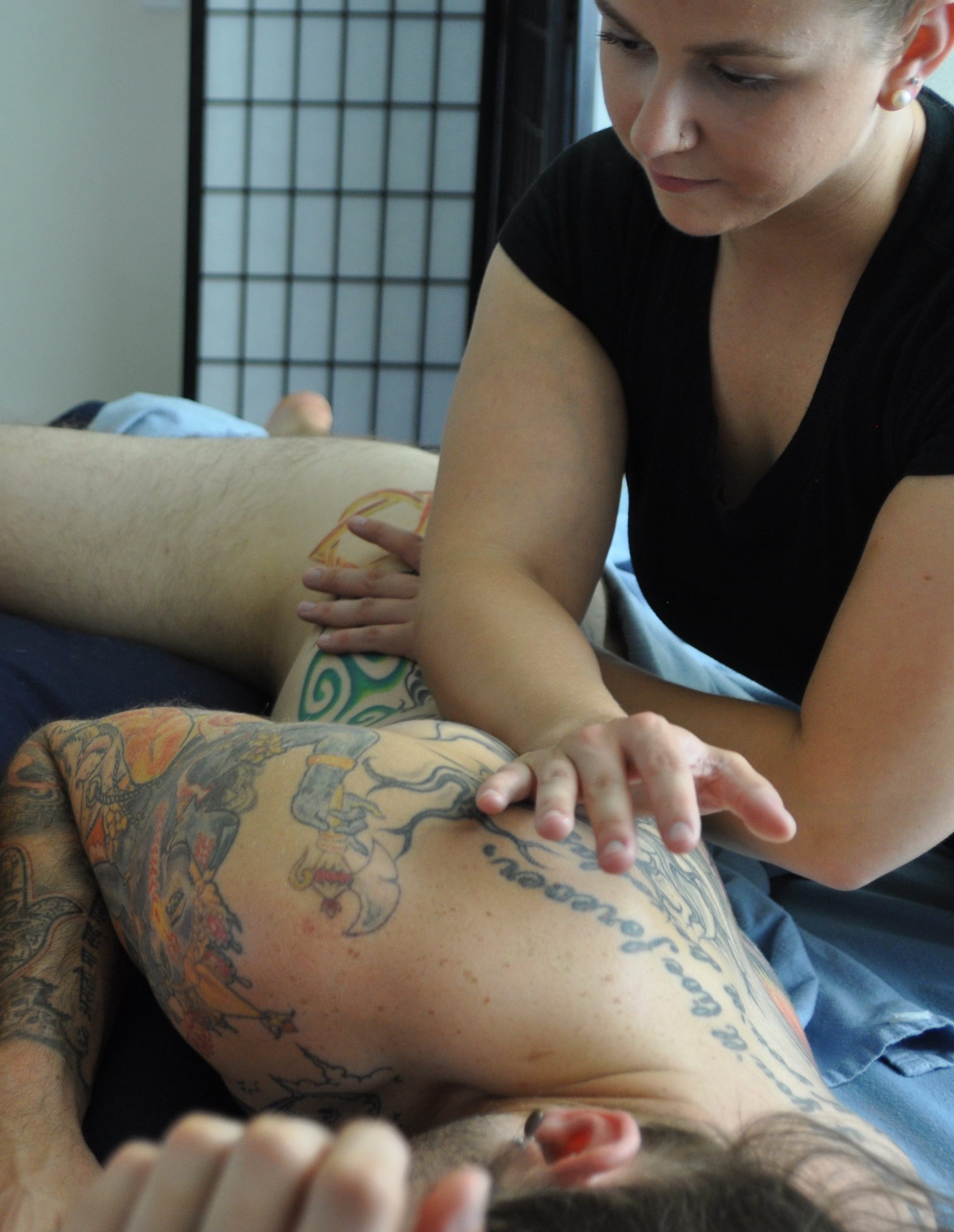
Forearm massage in Seattle may include the flexor and extensor muscles, the hands, palms, thumbs, upper arms, shoulders, and neck. The therapist may work with the wrist in different positions to distinguish between general tension and more specific sensitivity. Slow pressure, broad stripping, compression, and gentle movement can help the muscles reduce guarding and improve the sense of mobility.
How massage can support recovery
Recovery also depends on what happens between sessions. Frequent movement breaks, changing hand positions, supporting the forearms, reducing unnecessary grip, and varying tasks can be more useful than waiting until pain forces a complete stop. A massage cannot erase an unchanged workload, but it can reduce symptoms and make it easier to notice habits that are contributing.
Your forearms have had enough scrolling, but they probably do not need complete retirement. They need variety, appropriate demand, and recovery. A thoughtful whole-body massage recognizes that the hands are connected to the elbows, shoulders, neck, and nervous system. The goal is not merely to loosen one tight strip of muscle; it is to help the entire upper limb work with less effort.
When to seek professional evaluation
Forearm discomfort should be evaluated when it follows a significant injury, produces marked weakness or loss of grip, includes persistent numbness or tingling, or interferes with sleep and everyday function. Symptoms around the wrist, hand, and elbow can arise from muscle overload, tendon irritation, joint problems, or nerve compression. Massage may reduce muscular tension, but persistent neurologic symptoms deserve assessment rather than increasingly aggressive pressure.
Learn more from trusted health sources
For more information about two common conditions that can resemble ordinary forearm overuse, see:
A thoughtful next step
If this description sounds familiar, a personalized massage session may help you explore the larger pattern rather than only chasing the sorest spot. Massage Reimagined offers thoughtful, whole-body massage in Seattle with locations in Lower Queen Anne, Fremont, and Magnolia.
Your muscles have been trying to get your attention. Maybe it is time to listen. Schedule Now