Your diaphragm would like a word
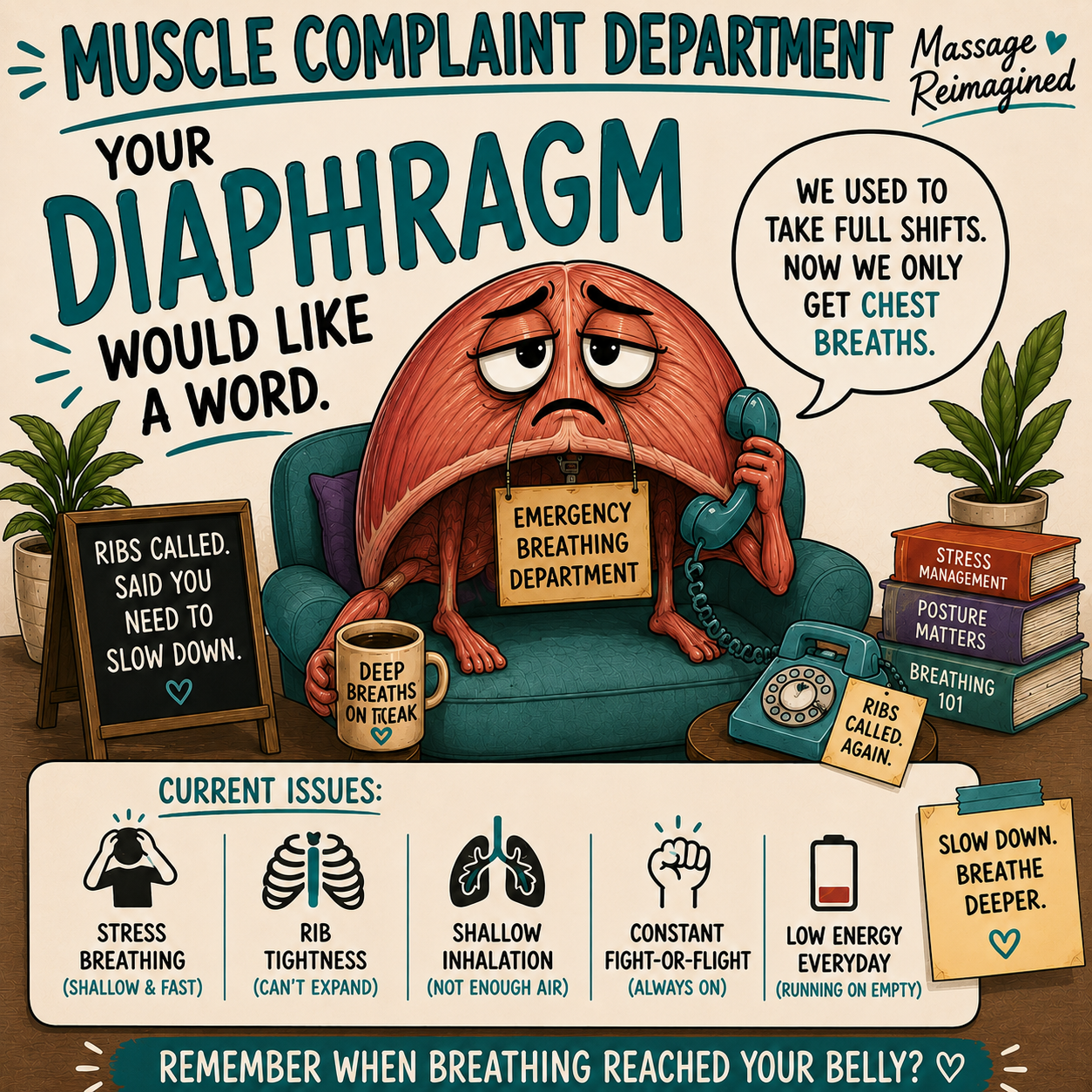
The diaphragm used to take full shifts. Lately it only gets chest breaths. This dome-shaped muscle sits under the lungs and does most of the work of quiet breathing, about 20,000 times a day, usually without anyone noticing. When stress, long hours at a desk, or a habit of holding the belly in change the way you breathe, the diaphragm is often the first muscle to lose its job, and diaphragm massage in Seattle is one way we help clients notice what has been happening.
What the diaphragm actually does
When you inhale, the diaphragm contracts and moves down, making room for the lungs to fill. The belly and lower ribs widen a little to make space. When you exhale, it relaxes and rises again. It also works with the deep abdominal muscles and the pelvic floor to manage pressure inside the trunk, which helps steady the spine when you lift, carry, cough or laugh.
Because it attaches to the lower ribs and the front of the lumbar spine, the diaphragm is closely connected to the rib cage, the low back and the deep core muscles.
How stress changes the way you breathe
Under stress, breathing tends to get faster and higher. Instead of letting the belly and lower ribs move, people start breathing with the upper chest and neck. The scalenes and other neck muscles step in as helpers, and the diaphragm does less. This is a normal short-term response. The trouble starts when it becomes the default, all day, long after the stressful moment has passed.
Holding the stomach in, sitting slumped for hours, and tight clothing can add to the pattern. Over time the body may simply forget what an easy, full breath feels like.
What a guarded diaphragm can feel like
People describe it in different ways: a breath that never feels quite finished, tightness around the lower ribs, a mid-back that will not settle, frequent sighing or yawning, or neck and shoulder muscles that are always on duty. Some notice it most when they try to relax and find that their breathing will not slow down.
How massage may help breathing feel easier
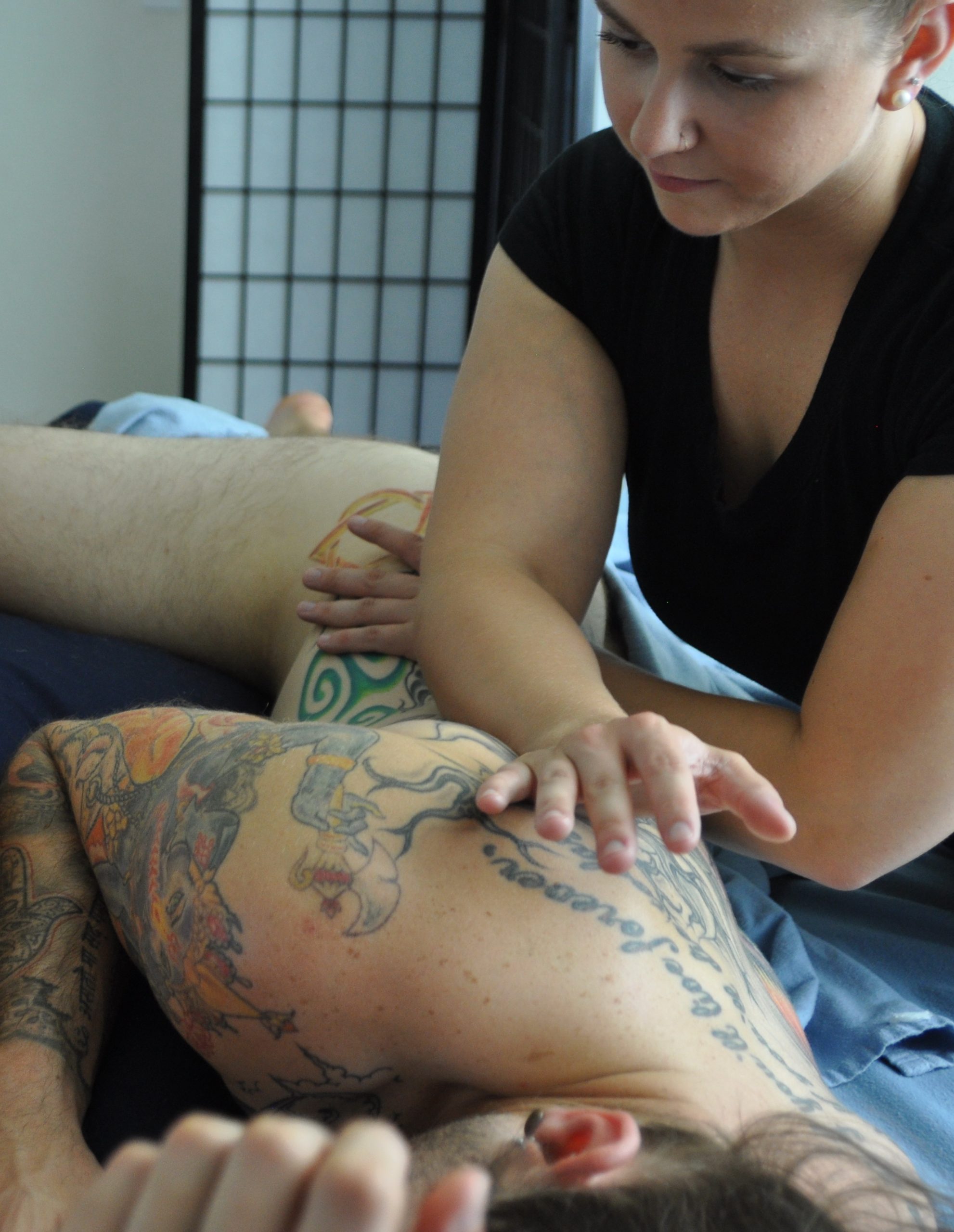
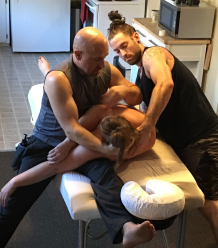
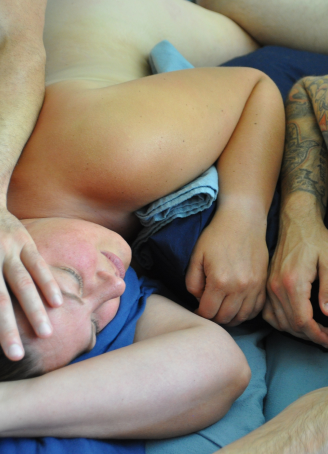
Massage does not train the diaphragm directly, but it can address many of the things that keep it from moving freely. Work on the ribs, the mid and low back, the abdomen, and the neck muscles that have been helping out may make it easier for the lower ribs to widen again. Slow, steady touch can also help the nervous system shift out of high alert, which often changes breathing on its own.
Abdominal work is always optional and done with clear consent. Many clients find it easiest to start with the back and ribs and simply notice the breath as the session goes on. Remember when breathing reached your belly? It can get there again.
When to seek medical evaluation
Shortness of breath, chest pain, a cough that will not go away, wheezing, or breathing problems after an illness or injury should be checked by a healthcare provider. Breathing that suddenly becomes difficult is an emergency. Massage can support relaxation and easier movement of the ribs, but it is not a treatment for lung, heart or nerve conditions.
Learn more from trusted health sources
For more about how the diaphragm works and how breathing practice can help, start with these resources:
A thoughtful next step
If this description sounds familiar, a personalized massage session may help you explore the larger pattern rather than only chasing the sorest spot. Massage Reimagined offers thoughtful, whole-body massage in Seattle with locations in Lower Queen Anne, Fremont, and Magnolia.
Your muscles have been trying to get your attention. Maybe it is time to listen. Schedule Now