Breathing, Mobility, and Mid-Back Tension
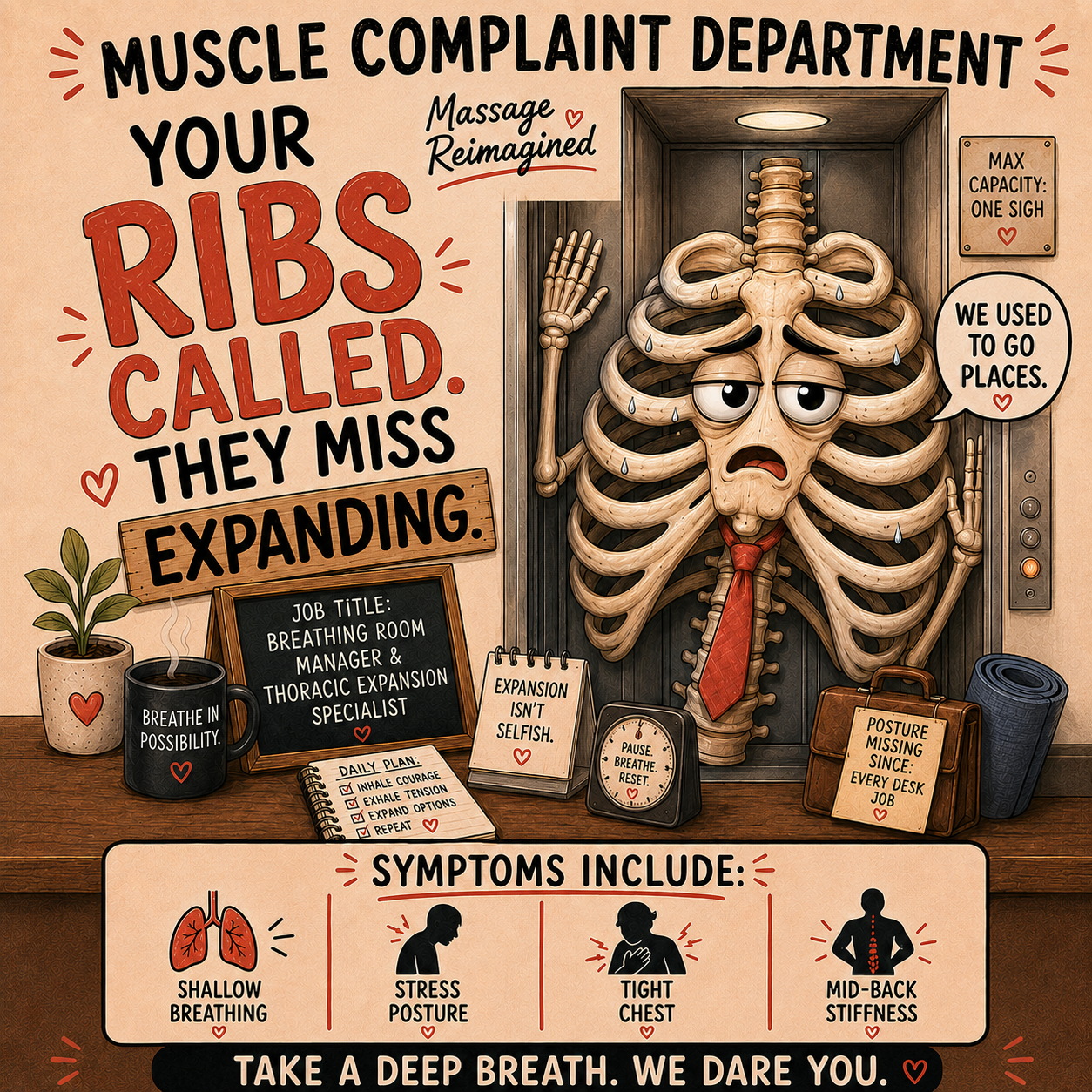
Your ribs were designed to move. Although the rib cage protects the heart and lungs, it is not meant to behave like a fixed box. Each breath creates expansion, rotation, and recoil through the ribs, sternum, thoracic spine, and surrounding muscles. When that movement becomes limited, people often notice more than a tight chest. They may feel stiffness through the mid-back, neck, shoulders, or even the low back. That is why some clients seek rib cage massage in Seattle when the discomfort they notice seems to be somewhere else.
Your ribs are not a rigid cage
Breathing is a whole-body movement. The diaphragm changes pressure inside the trunk, the ribs widen and narrow, and the spine subtly responds. The upper ribs move differently from the lower ribs, and movement should occur in several directions rather than only lifting the chest. When breathing becomes shallow or primarily upper-chest driven, accessory muscles in the neck and shoulders may work harder than intended.
How breathing and stress change rib movement
Stress often changes breathing before we notice it. People may hold their breath while reading email, brace during difficult conversations, or take smaller breaths during periods of anxiety and concentration. Pain can also reduce rib motion because the nervous system tries to protect the area. Over time, less movement can become the new normal, even after the original stressor has passed.
Why rib stiffness can show up elsewhere
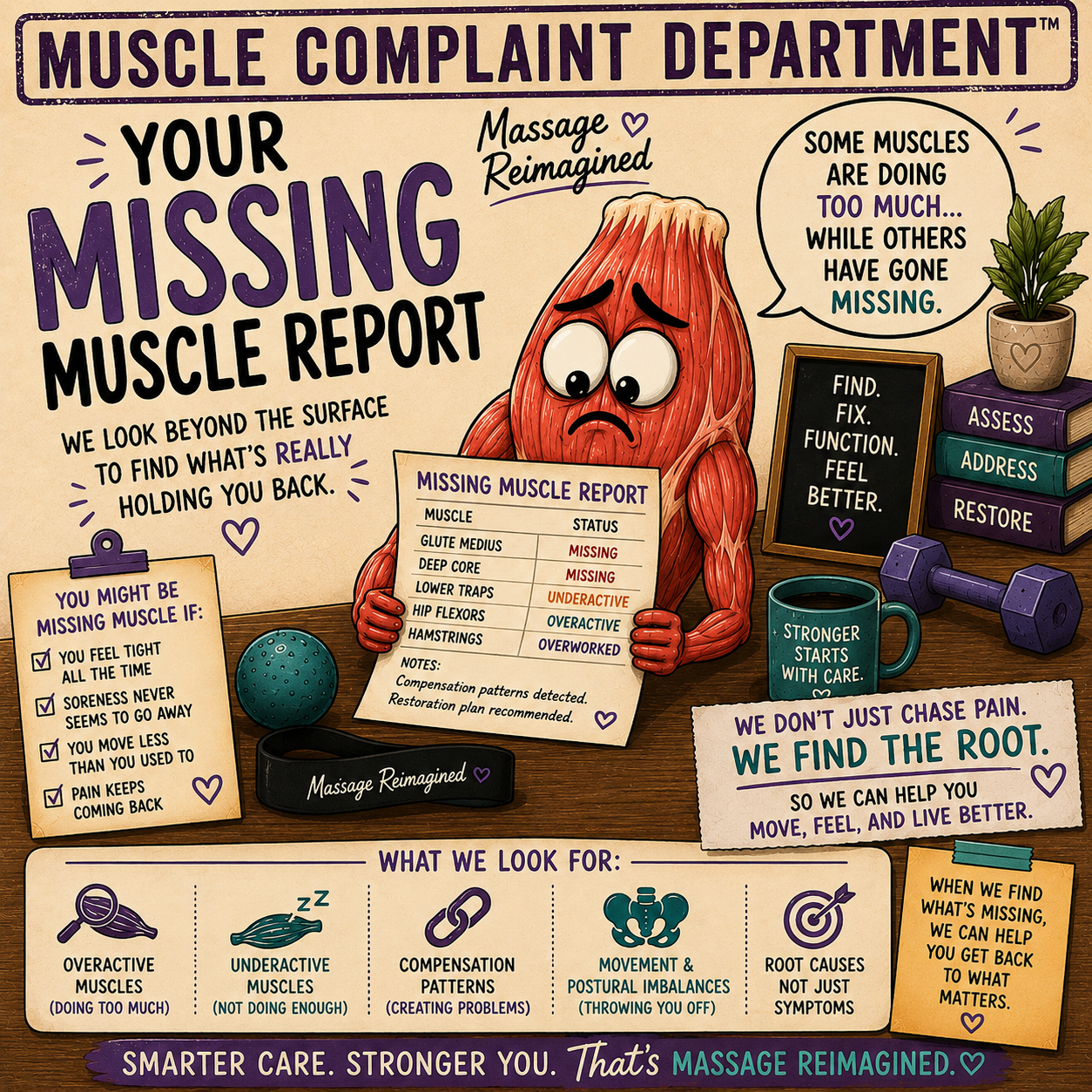
Reduced rib mobility can influence posture and movement. The shoulder blades glide over the rib cage, so a stiff thorax may change how the shoulders move. The neck may compensate for a chest that does not expand easily. The low back may extend more during breathing if the lower ribs remain rigid. These relationships help explain why treating only the most painful spot does not always create lasting change.
How massage may help restore options
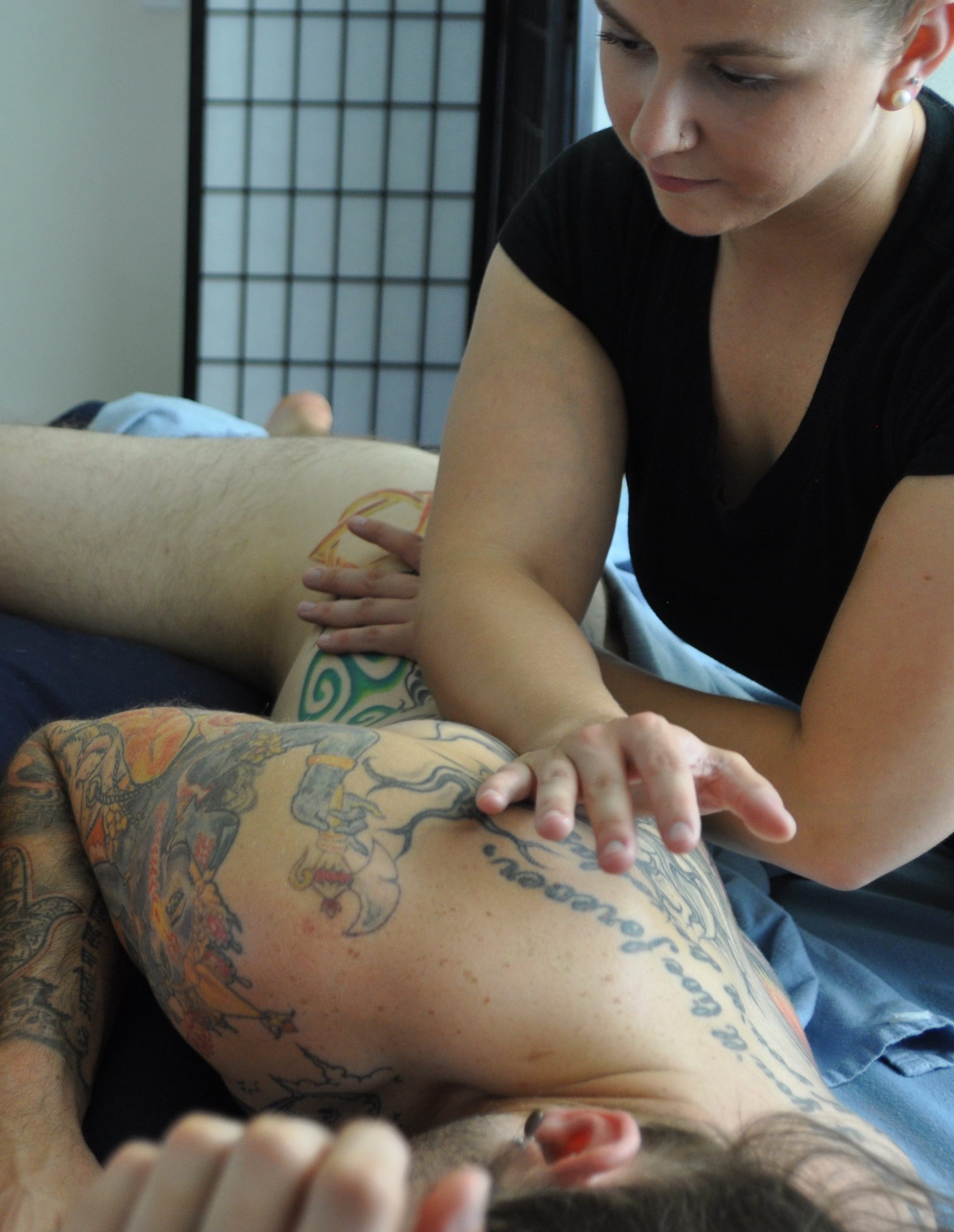
Massage around the rib cage can include the muscles between the ribs, the chest, upper back, shoulders, abdomen, and breathing-related muscles in the neck. The work should be comfortable, paced carefully, and guided by consent because the chest and rib area can feel personal or vulnerable. Rather than forcing a deep breath, the therapist can create conditions that make fuller breathing feel possible.
A thoughtful session may combine gentle compression, broad contact, movement, and pauses that allow the nervous system to adjust. Some people notice that the ribs begin moving more naturally when the surrounding muscles no longer feel obligated to protect them. Your ribs do not want to be a cage. They want to participate in a dynamic breathing system that supports movement from the inside out.
When to seek professional evaluation
New or unexplained chest pain, difficulty breathing, pain after a significant fall or impact, fever, or symptoms that feel cardiac or pulmonary should be medically evaluated before assuming the problem is muscular. Massage may be appropriate for ordinary stiffness and tension around the thorax, but it is not a treatment for rib fractures, respiratory disease, or unexplained chest symptoms. When there is uncertainty, evaluation comes first.
Learn more from trusted health sources
These resources offer additional information about diaphragmatic breathing and the mechanics of breathing more broadly:
A thoughtful next step
If this description sounds familiar, a personalized massage session may help you explore the larger pattern rather than only chasing the sorest spot. Massage Reimagined offers thoughtful, whole-body massage in Seattle with locations in Lower Queen Anne, Fremont, and Magnolia.
Your muscles have been trying to get your attention. Maybe it is time to listen. Schedule Now