Understanding Deep Low-Back Tightness
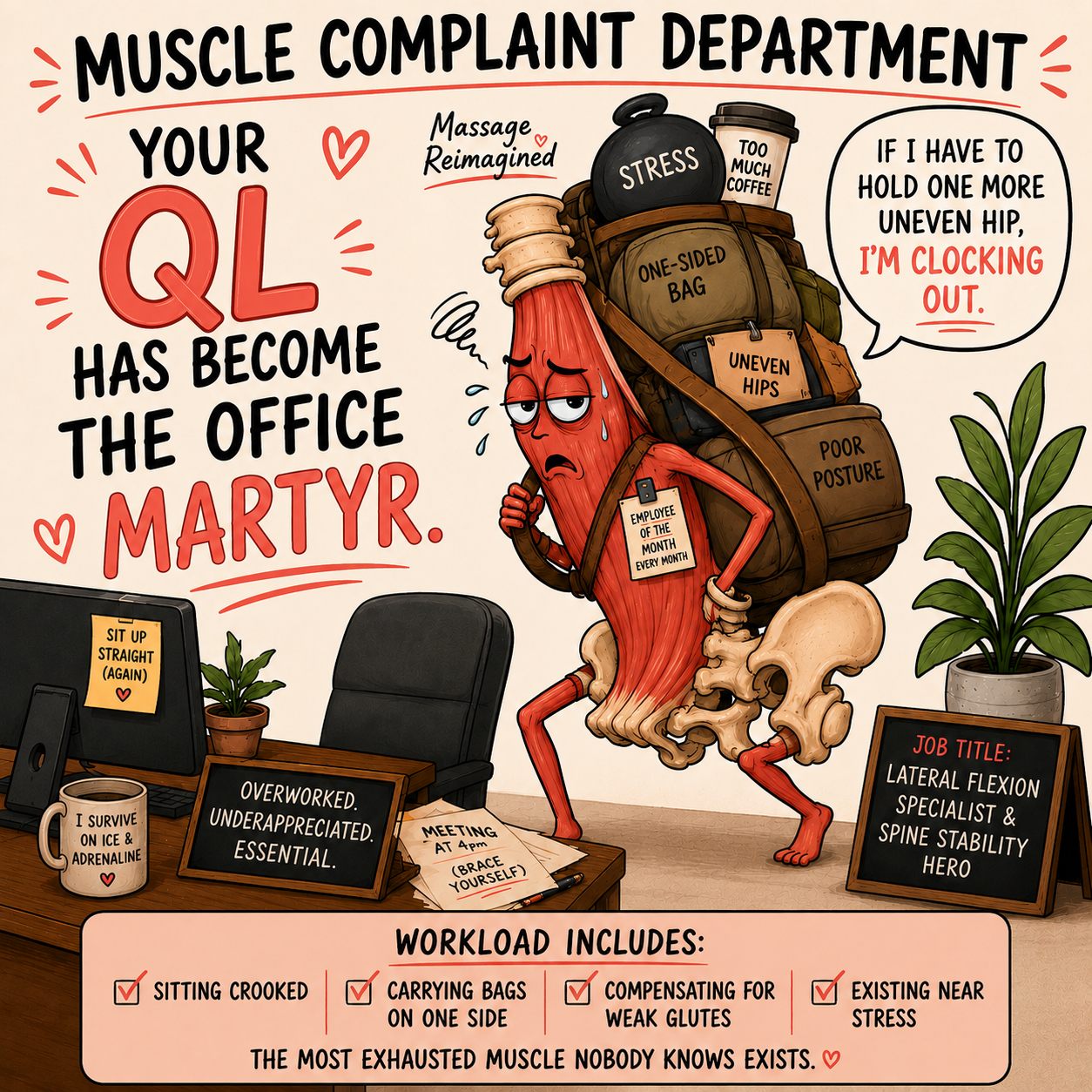
The quadratus lumborum, usually called the QL, is a deep muscle in the low back that connects the pelvis, lumbar spine, and lowest rib. It helps stabilize the trunk, assist side bending, and manage the relationship between the rib cage and pelvis. Because it is deep and difficult to visualize, many people do not know it exists until it becomes intensely tight or tender.
What the quadratus lumborum does
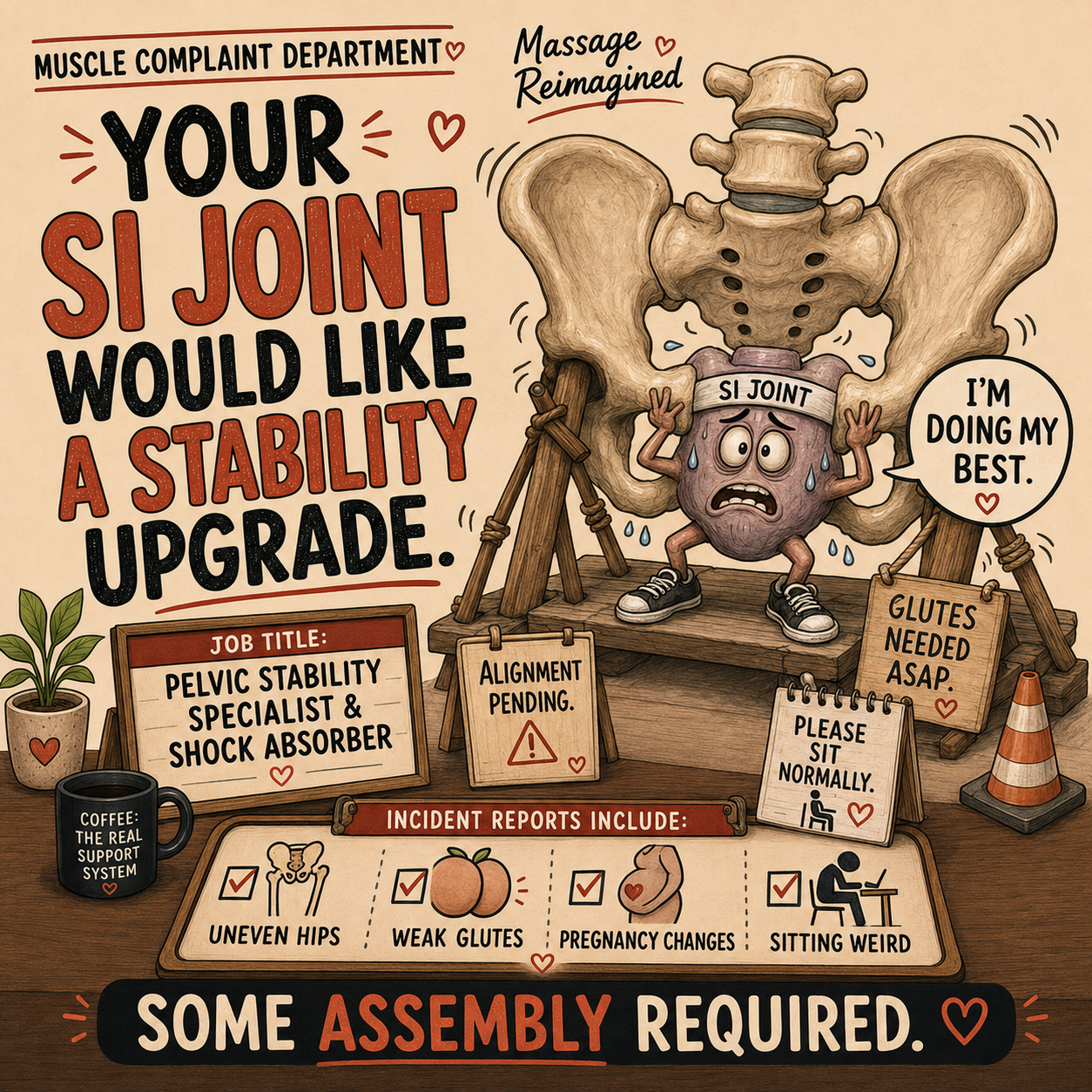
The QL frequently becomes an emergency backup system. If the hips are not sharing load effectively, the abdominal wall is not coordinating well, or the body repeatedly shifts weight to one side, the QL may create extra stability. It can also work harder during carrying, standing, walking, or breathing when the ribs and pelvis do not move comfortably relative to one another.
Why the QL becomes an emergency backup system
One-sided habits matter. Carrying a bag on the same shoulder, standing with weight on one leg, sleeping in a consistently twisted position, or working at an asymmetrical station can create repeated demand. A temporary compensation is not inherently harmful; the body is designed to adapt. The problem comes when the same strategy is used all day, every day, without enough variation or recovery.
One-sided habits and uneven loading
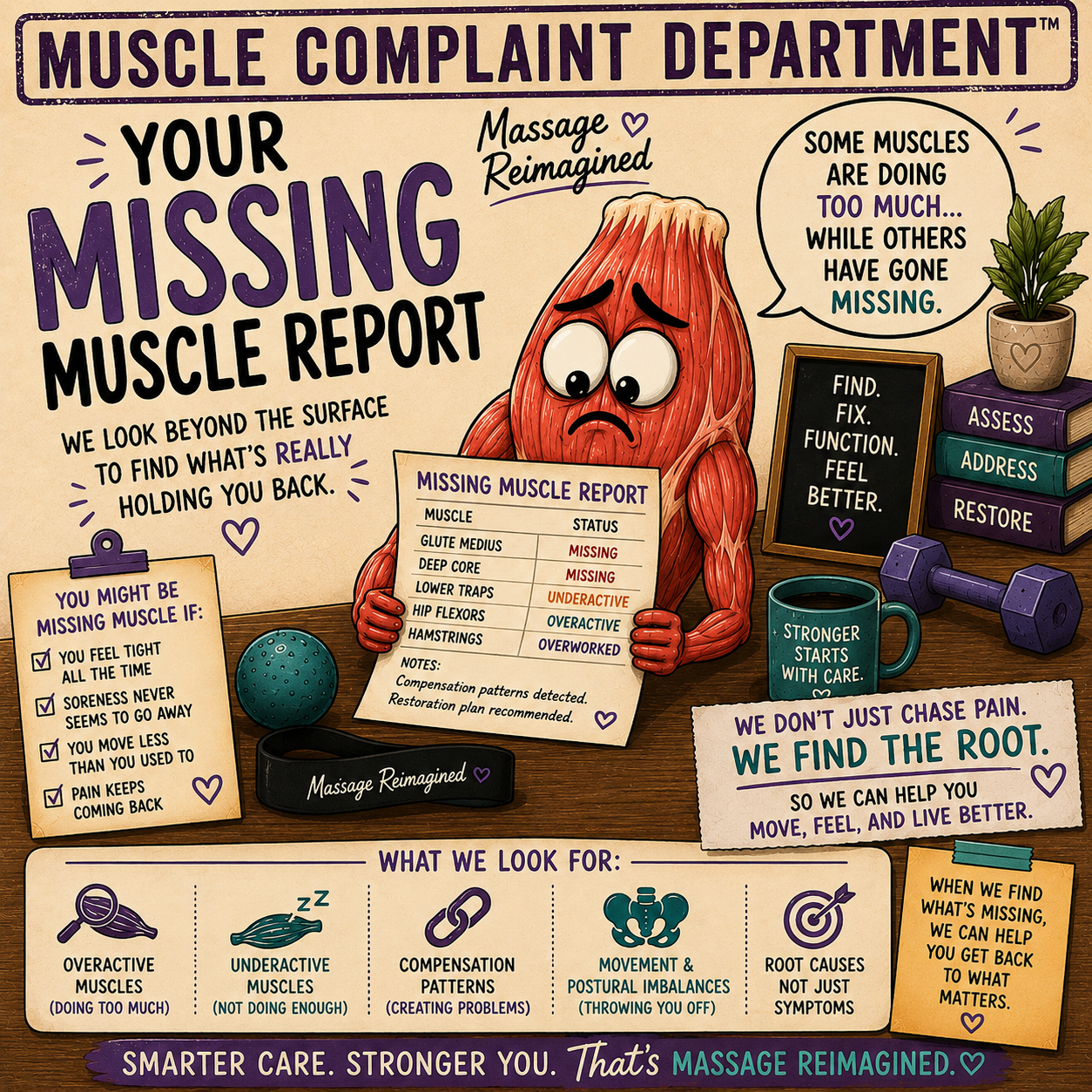
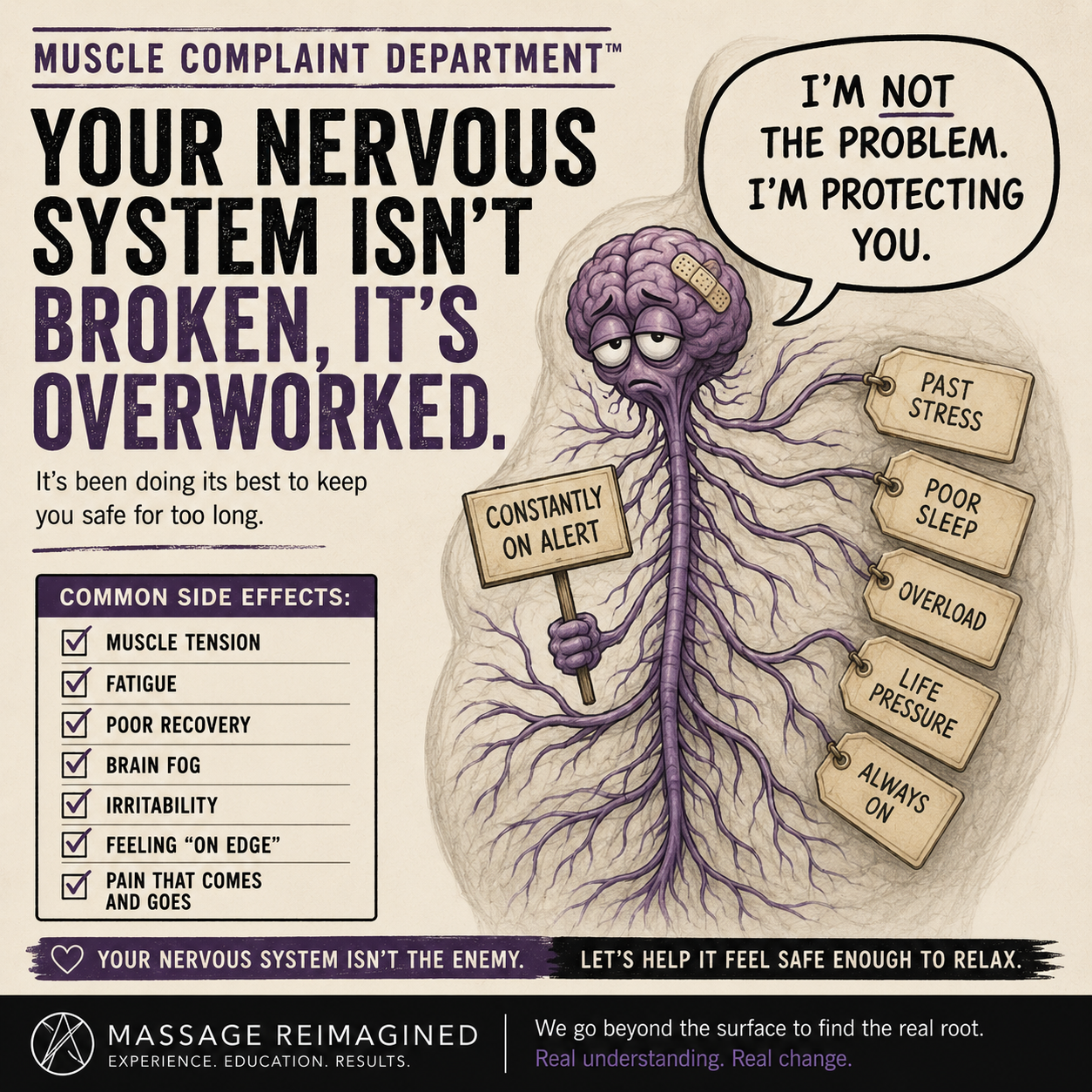
People with QL tension often describe an ache near the top of the pelvis, a feeling that one side of the low back is shorter, or discomfort when transitioning from sitting to standing. The area may feel tight because it is irritated, but it may also feel tight because it is trying to provide security. In that situation, stretching aggressively can sometimes make the body feel less stable and increase guarding.
How massage can address more than the painful spot
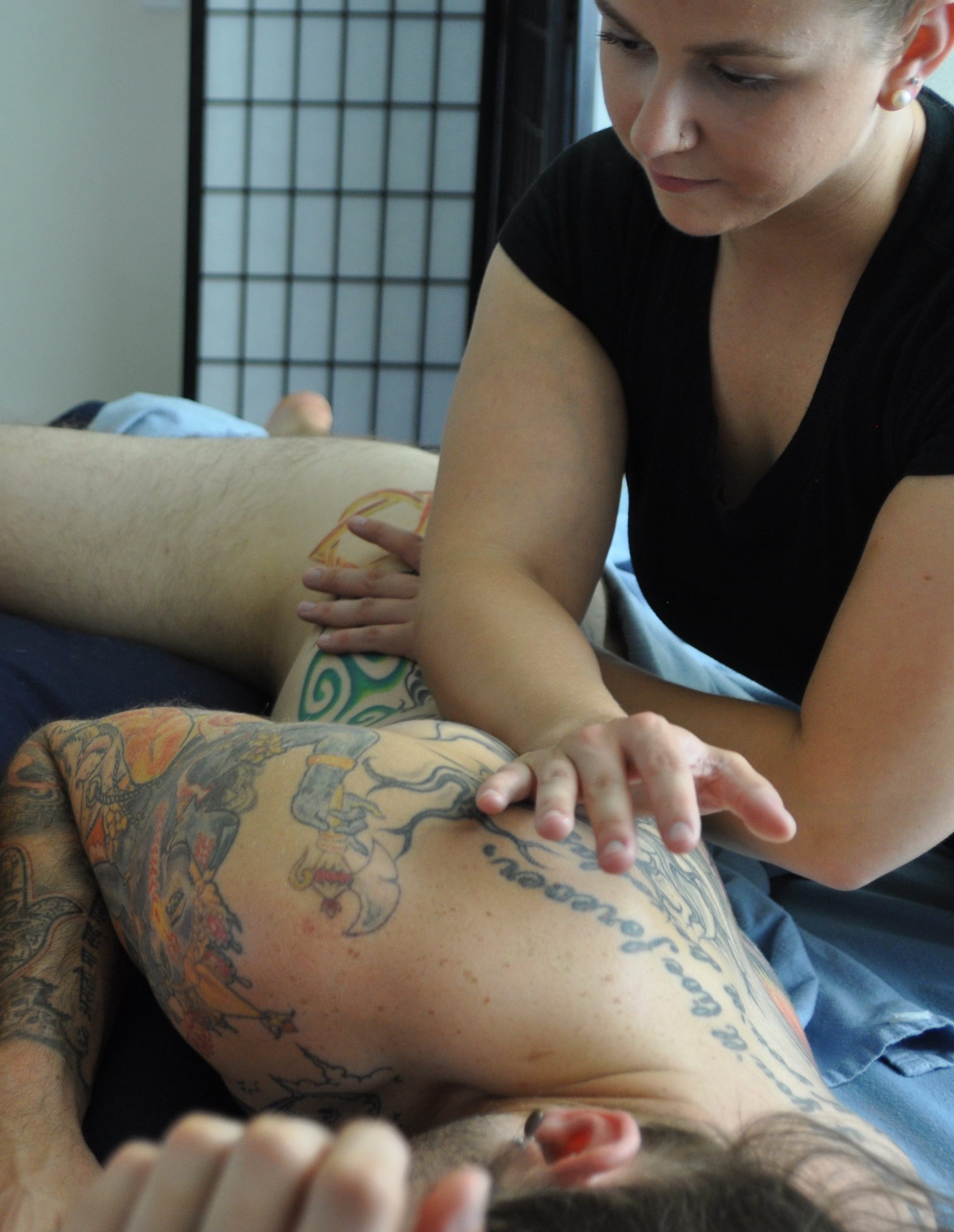
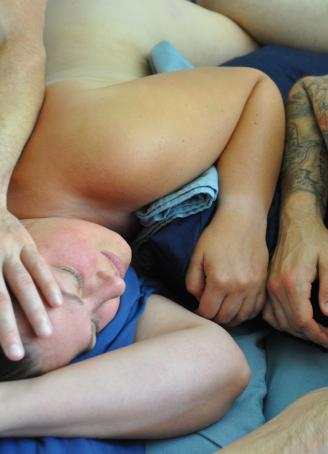
Quadratus lumborum massage may include direct work to the low back, but a thoughtful session usually considers the glutes, hips, abdominal wall, rib cage, diaphragm, and legs. Positioning can make a significant difference; side-lying work often allows the area to be approached with less compression and more comfort. The therapist may also use movement and breathing to see whether the muscle can reduce effort while the rest of the system contributes more.
Low-back pain has many possible causes, and persistent, severe, or neurologic symptoms should be evaluated by an appropriate healthcare professional. For ordinary muscular tightness, massage can help reduce guarding and create a clearer sense of how the area moves. Your QL may not be failing. It may be exhausted from being asked to hold everything together.
When to seek professional evaluation
Low-back pain should be evaluated promptly when it follows a major injury or includes new bowel or bladder changes, saddle numbness, significant leg weakness, fever, unexplained weight loss, or pain that is severe and unrelenting. Kidney and abdominal conditions can sometimes be felt near the same region as the QL, so not every deep ache beside the spine is muscular. Massage is most appropriate when serious causes have been ruled out and the symptoms fit a musculoskeletal pattern.
Learn more from trusted health sources
These general medical resources explain low-back pain, common causes, and warning signs that merit evaluation:
A thoughtful next step
If this description sounds familiar, a personalized massage session may help you explore the larger pattern rather than only chasing the sorest spot. Massage Reimagined offers thoughtful, whole-body massage in Seattle with locations in Lower Queen Anne, Fremont, and Magnolia.
Your muscles have been trying to get your attention. Maybe it is time to listen. Schedule Now