Understanding the Body’s Connective Tissue Network
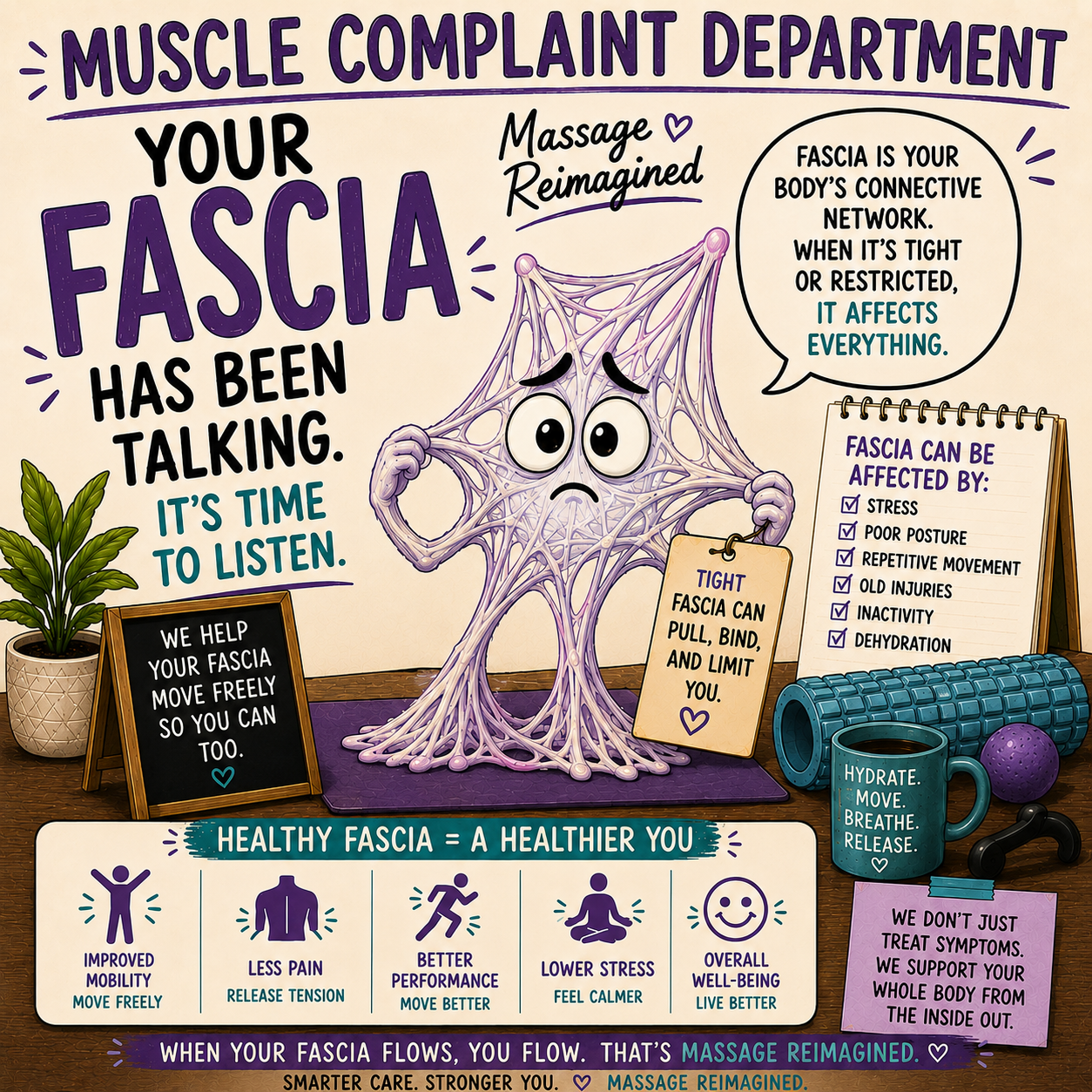
Fascia is the body’s connective tissue network. It surrounds and supports muscles, nerves, blood vessels, organs, and many other structures, creating continuity from one region to another. For years, fascia was often treated as little more than packaging. Today it is understood as a living, sensory tissue that contributes to force transmission, movement, body awareness, and the way different parts of the body relate.
What fascia actually is
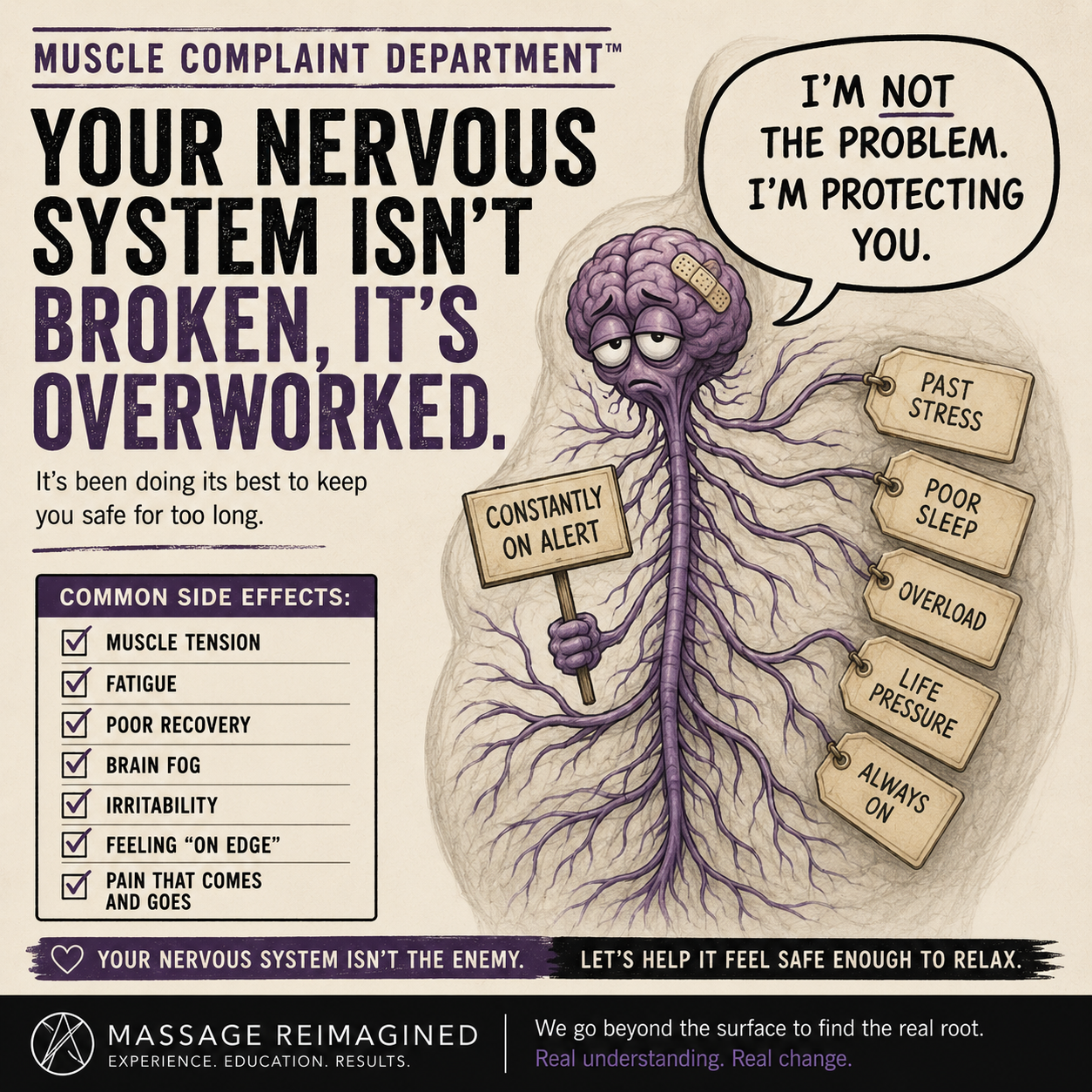
Because fascia is everywhere, it can also become an overly convenient explanation for every ache. Statements that fascia is ‘stuck,’ ‘full of toxins,’ or must be permanently broken apart oversimplify a complex system. Connective tissue adapts to load and movement, but pain and stiffness also involve muscles, joints, nerves, circulation, expectations, sleep, stress, and the nervous system. Fascia matters, but it is not a separate suit wrapped around an otherwise unrelated body.
Why fascia became such a popular explanation
The connective tissue network responds to repeated positions, injury, surgery, inflammation, activity, and inactivity. It also contains sensory receptors that contribute to body awareness and pain. A region that feels restricted may involve changes in tissue glide, muscle tone, hydration, sensitivity, or protective guarding. What a person experiences as a ‘fascial pull’ can be real without requiring a dramatic claim about adhesions or structural distortion.
Fascia responds to movement, load, and the nervous system
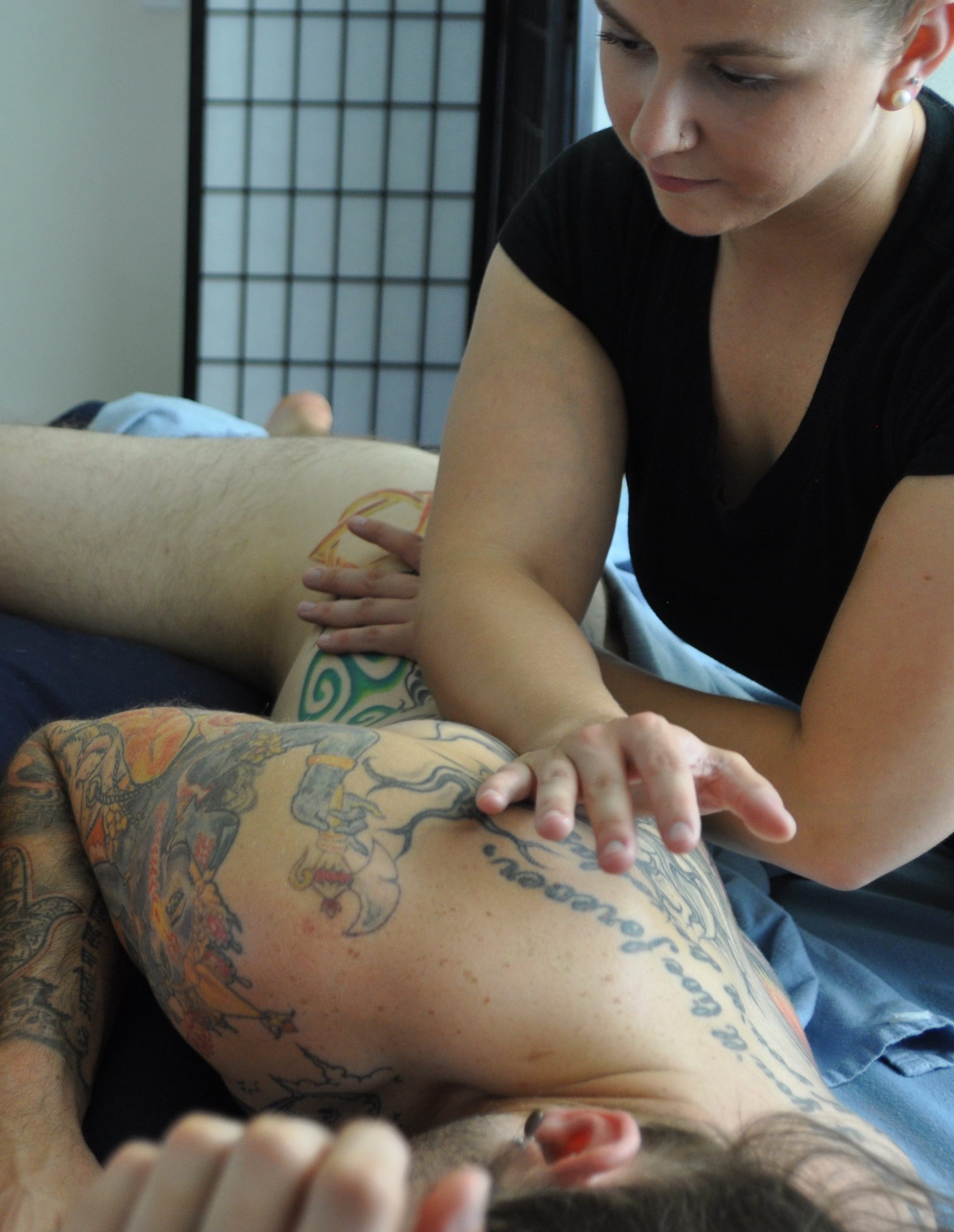
Myofascial massage in Seattle may include slow sustained pressure, broad stretching, skin rolling, movement, and attention to how tension appears to travel across regions. The work is often slower than traditional Swedish massage, but it should not require extreme discomfort. More force does not necessarily create more change. When pressure exceeds the nervous system’s sense of safety, the body may brace against the technique.
What myofascial massage may feel like
A whole-body approach is especially appropriate for fascial work because the complaint may not respect anatomical boundaries. A restriction near the hip may influence how the trunk rotates, while tension in the chest may change shoulder movement. The goal is not to chase an imaginary perfect alignment. It is to increase options, reduce sensitivity, and help the person feel more connected and comfortable in movement.
Fascia reminds us that the body is not a collection of isolated parts. Pulling on one area can influence another, but so can breathing, attention, stress, and movement. Thoughtful massage works with that interconnectedness rather than pretending one tissue explains everything. When your fascia flows, you may not literally ‘flow’ in a mechanical sense, but your body can feel less guarded and more adaptable.
When to seek professional evaluation
Fascia is real and important, but it should not become an explanation for every pain or movement limitation. Persistent symptoms may involve muscles, tendons, joints, nerves, inflammatory conditions, or other medical issues. A thoughtful massage therapist can work with connective tissue and movement without claiming to permanently reshape the body or diagnose a fascial disorder. When symptoms are unexplained, severe, or worsening, medical assessment remains the appropriate next step.
Learn more from trusted health sources
For additional background on fascia and the evidence surrounding massage therapy, consider these resources:
A thoughtful next step
If this description sounds familiar, a personalized massage session may help you explore the larger pattern rather than only chasing the sorest spot. Massage Reimagined offers thoughtful, whole-body massage in Seattle with locations in Lower Queen Anne, Fremont, and Magnolia.
Your muscles have been trying to get your attention. Maybe it is time to listen. Schedule Now