Neck Tension, Stress Breathing, and Overworked Assistants
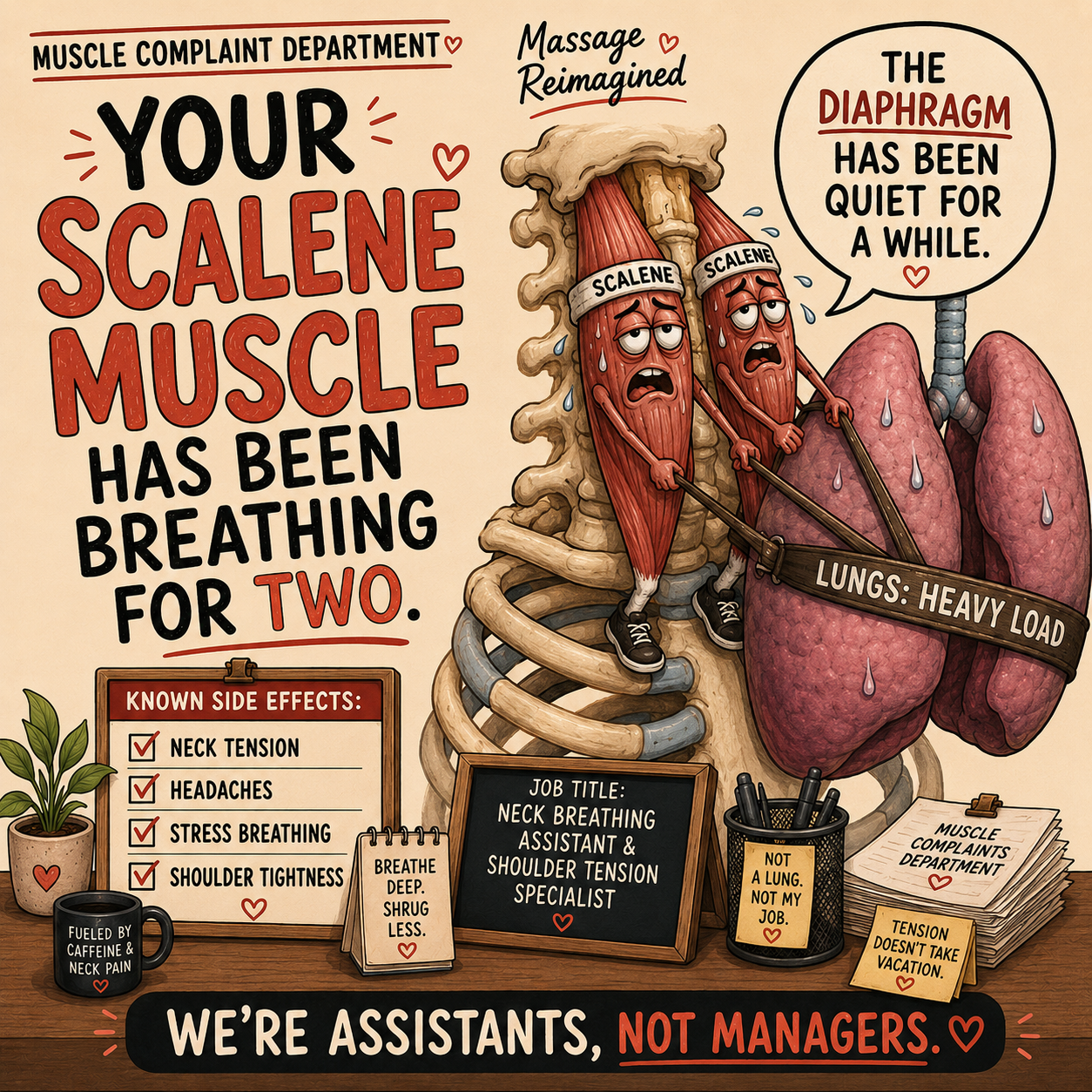
The scalene muscles live along the sides of the neck, attaching the cervical spine to the upper ribs. They help move and stabilize the neck and can assist with lifting the upper ribs during increased breathing demand. That assistance is useful when you are exercising or genuinely need more air. It becomes less useful when the body recruits them for every ordinary breath because stress has convinced the system that each day is an emergency.
What the scalenes do
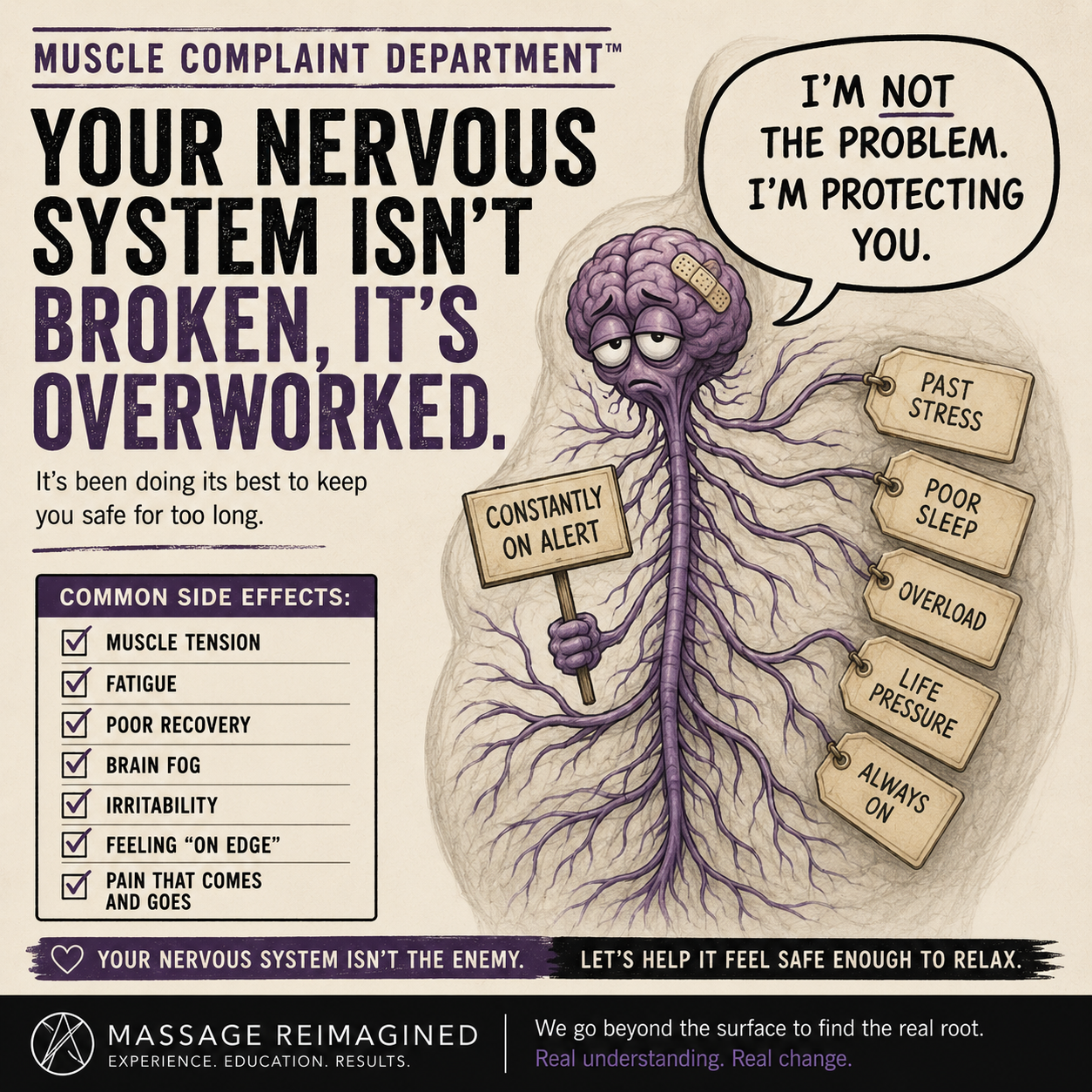
Shallow, upper-chest breathing often increases activity in the scalenes, sternocleidomastoid, and upper shoulder muscles. This pattern may appear during anxiety, pain, prolonged sitting, intense concentration, or after respiratory illness. It is not always something a person can simply stop by being told to ‘breathe correctly.’ Breathing is automatic and closely linked to the nervous system’s sense of safety.
How stress breathing changes their role
Overworked scalenes may contribute to neck stiffness, headaches, upper shoulder discomfort, or a feeling of tightness near the collarbone. The region is anatomically complex because nerves and blood vessels pass between and around these muscles. Symptoms such as persistent numbness, weakness, swelling, color changes, or significant arm pain deserve medical evaluation rather than being assumed to be a simple muscle knot.
Why scalene tension can feel complicated
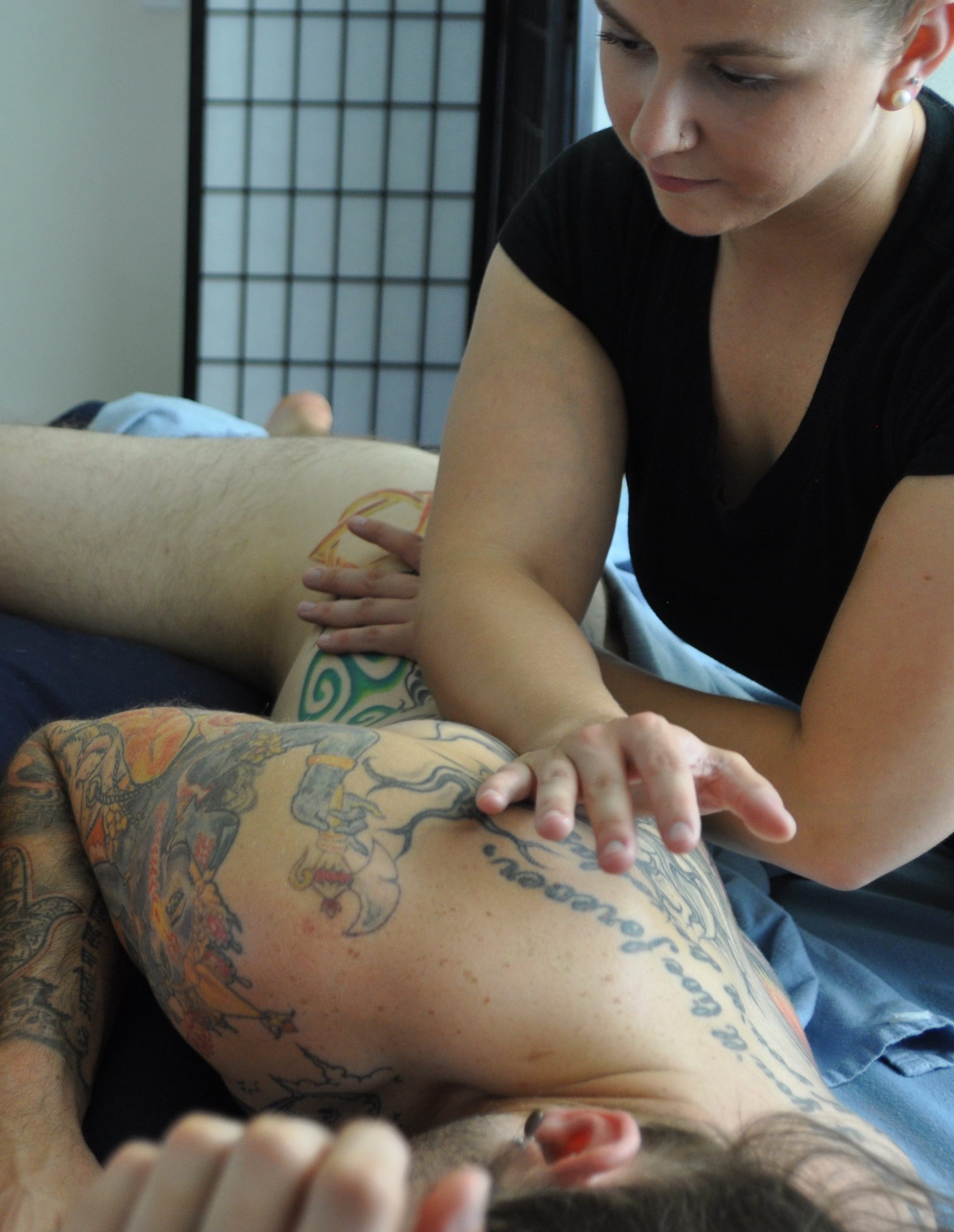
For ordinary muscular tension, scalene massage must be careful and specific. The front and side of the neck contain sensitive structures, and aggressive pressure is inappropriate. A therapist may focus as much on the rib cage, chest, shoulders, upper back, and breathing pattern as on the scalenes themselves. Gentle contact and movement can often be more effective than trying to dig under the collarbone.
How massage can reduce unnecessary workload
The goal is to help the scalenes return to their intended role as assistants rather than full-time managers. When the lower ribs and diaphragm participate more comfortably, the neck may no longer need to lift the chest with every breath. Massage can support that shift by reducing guarding and giving the person a chance to experience breathing without the same urgency.
Your scalenes were not hired to do all your breathing. They are valuable helpers, but they need the rest of the system to contribute. A thoughtful whole-body session can address the neck while also considering the ribs, jaw, shoulders, posture, and nervous system that shape its workload.
When to seek professional evaluation
Neck and upper-chest symptoms require extra care when they include arm weakness, persistent numbness or tingling, swelling, discoloration, a weak pulse, dizziness, shortness of breath, or pain brought on by exertion. These symptoms may involve nerves, blood vessels, the cervical spine, or other medical conditions rather than simply tight scalenes. Massage should not be used to test or treat suspected thoracic outlet syndrome without appropriate evaluation.
Learn more from trusted health sources
These resources explain neck pain and thoracic outlet syndrome in more detail:
A thoughtful next step
If this description sounds familiar, a personalized massage session may help you explore the larger pattern rather than only chasing the sorest spot. Massage Reimagined offers thoughtful, whole-body massage in Seattle with locations in Lower Queen Anne, Fremont, and Magnolia.
Your muscles have been trying to get your attention. Maybe it is time to listen. Schedule Now